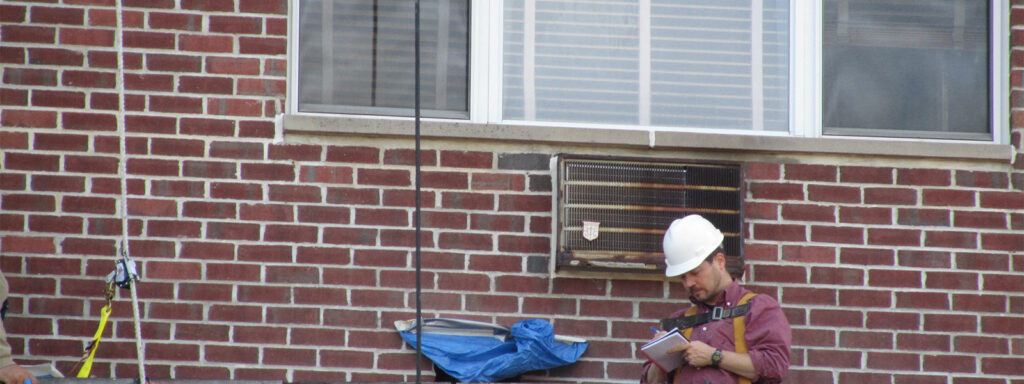
When was the last time you actually looked up at your building’s roofline? The brick parapet, the low wall that runs along the edge of your roof takes more abuse than almost any other part of your building’s exterior, yet it’s often the last thing property managers inspect. Left unaddressed, minor parapet brick repair issues can turn into costly structural and water infiltration problems.
This guide covers what parapet brick is, why it fails faster than the rest of your masonry, the warning signs to watch for, and what a proper repair involves for commercial and multifamily properties.
What Is a Parapet Brick Wall?
A parapet is the section of exterior wall that extends above the roofline. On most commercial and multifamily buildings, it’s built from the same brick and mortar as the rest of the facade, but it functions very differently. Parapets serve several practical purposes:
- Preventing falls from the roof edge
- Blocking wind uplift and debris from the rooftop
- Concealing rooftop mechanical equipment
- Contributing to a building’s fire-separation design
- Adding architectural definition to the roofline
Despite looking like a simple extension of the facade, the parapet is one of the most exposed and structurally vulnerable elements of a building envelope.
Why Parapet Brick Cracks and Fails Faster Than Other Masonry
Parapet walls don’t have the benefit of a “dead load” the weight of the floors and walls above pressing down to help contain movement the way the rest of your masonry does. Because a parapet is essentially a freestanding cantilever exposed on both sides, it expands and contracts at a faster rate than the wall below it.
This differential movement is the root cause of most parapet brick problems:
- Thermal cycling. Parapets absorb direct sun and cold air on both faces, causing brick and mortar to expand and contract repeatedly.
- Missing or failed expansion joints. Without joints to absorb movement, stress concentrates in the mortar and brick, producing cracks.
- Freeze-thaw damage. Water that enters mortar joints expands when it freezes, gradually forcing joints and brick faces apart.
- Coping and cap displacement. Once a coping stone or cap shifts, water has a direct path into the wall cavity, accelerating deterioration from the inside out.
Warning Signs Your Parapet Brick Needs Repair
Most parapet brick repair issues start small and are easy to miss from ground level. Common warning signs include:
- Vertical or step cracking along mortar joints
- A displaced, cracked, or loose coping stone or cap
- Efflorescence (white, chalky staining) on the brick face
- Interior water stains near the roofline or top-floor ceilings
- Loose or spalling brick near the roof edge
- Visible gaps between the parapet and the roof membrane
If you’re noticing any of these on your property, it’s worth having the parapet inspected before the next freeze-thaw cycle does more damage.
How Professional Parapet Brick Repair Works
At Adriatic Restoration, our approach to parapet brick repair is built around restoring both structural integrity and long-term water resistance:
- Inspection and assessment — We evaluate the extent of cracking, mortar deterioration, coping condition, and the wall’s connection to the roof membrane.
- Brick and mortar restoration — Wherever possible, we salvage and reuse original brick and stone. Where units are too damaged, we source matching replacement brick or fabricate custom units to blend seamlessly with the existing facade.
- Tuckpointing and grinding — Deteriorated mortar joints are ground out and repointed to restore both appearance and weather resistance.
- Coping and flashing repair — Damaged coping stones and through-wall flashing are repaired or replaced to stop water from entering at the top of the wall.
- Waterproof coating application — A protective coating is applied where appropriate to add an additional barrier against moisture intrusion.
Our goal on every project is to match the original masonry as closely as possible while solving the underlying movement and waterproofing issues not just patching the surface.
Preventing Future Parapet Damage
Regular maintenance extends the life of a repaired parapet significantly. We recommend building owners and property managers:
- Schedule a visual parapet inspection at least once a year, ideally before winter
- Address hairline cracks immediately, before freeze-thaw cycles widen them
- Confirm expansion joints are intact and functioning during any facade project
- Keep coping stones and caps sealed and properly pitched to shed water
- Pair parapet repairs with a broader facade waterproofing plan, since the two systems work together to protect the building envelope
Frequently Asked Questions
What causes parapet brick to crack?
Parapet brick cracks mainly due to thermal expansion and contraction, missing or failed expansion joints, and freeze-thaw cycles that widen existing gaps in the mortar over time.
How do I know if my parapet wall needs repair?
Look for visible cracking in mortar joints, a shifted or damaged coping stone, white efflorescence staining, or water stains on interior ceilings near the roofline.
Can parapet brick be repaired, or does it need full replacement?
Most parapet brick repair projects reuse the majority of the original brick and stone, replacing only damaged units. Full replacement is typically reserved for parapets with extensive structural deterioration.
How often should a parapet wall be inspected?
An annual inspection, ideally in the fall before winter freeze-thaw cycles begin, is enough to catch most issues while they’re still minor and inexpensive to fix.
At Adriatic Restoration, we provide parapet brick repair in New Jersey for commercial and multifamily buildings, helping property owners avoid the structural and water damage that comes from a neglected roofline. To get your parapet wall inspected, consult with our team today.