
Brick Wall Waterproofing Services in New Jersey
Breathable sealers, repointing, and moisture repair that stop water absorption, wet walls, and mold behind the brick across NJ.
Is Waterproofing Your Brick Walls Really Necessary? Yes.
Brick looks tough, but it drinks water like a sponge. After years of NJ weather, the brick and mortar absorb moisture, then freeze-thaw winters crack them from the inside out. That trapped water shows up as damp interior walls, efflorescence, and mold growing behind the brick where you can’t see it. Adriatic Restoration has been waterproofing brick walls across New Jersey since 1982.
Our Brick Wall Waterproofing Services
Everything a water-absorbing brick wall needs, handled by one crew:
- Breathable penetrating water repellent application
- Clear masonry sealer treatment for brick and block
- Mortar joint repointing before sealing
- Brick crack repair and replacement
- Caulking and sealant replacement at joints and penetrations
- Efflorescence treatment and removal
- Moisture-source investigation and water testing
- Through-wall flashing repair where accessible
- Parapet and coping waterproofing on brick walls
- Spalled and deteriorated brick restoration — see Concrete Waterproofing
- Interior dampness and behind-the-wall moisture repair
- Brick wall condition surveys and reports
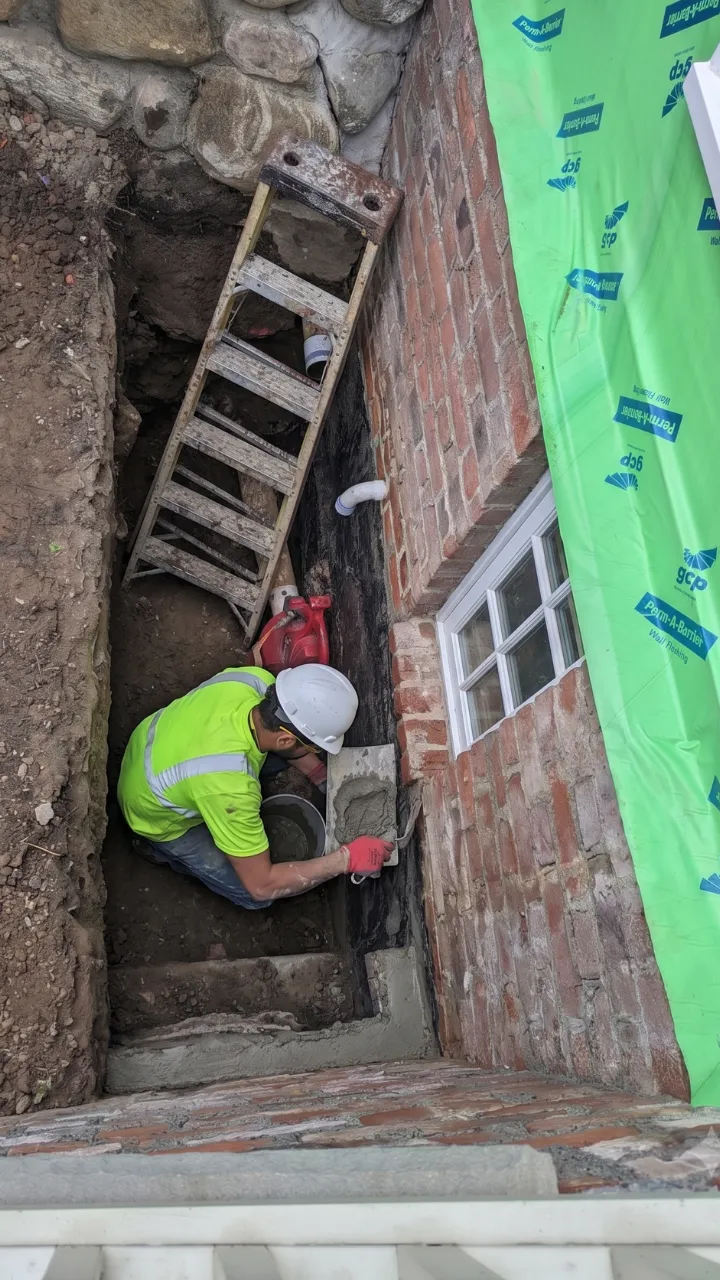
Three Steps to a Dry, Breathing Brick Wall
Step 1: Find Where the Water Gets In
Damp walls and mold rarely start where they show — water can enter high and travel down inside the wall. We inspect the brick, mortar joints, and penetrations up close, test where water is absorbing or entering, and give you a written scope with exact pricing for what your wall actually needs.
Step 2: Repair the Mortar Before Sealing
A sealer over cracked, crumbling joints is wasted money — so repointing comes first. We rake out and repoint failed mortar, repair or replace spalled brick, and replace failed caulk so the wall is sound and continuous. Only a repaired wall is ready to be sealed.
Step 3: Seal It Breathable, Not Trapped
We apply a breathable penetrating repellent that stops water from soaking in while still letting trapped moisture escape from within the wall. Every joint, edge, and penetration gets attention, then we verify the result and walk the finished wall with you before closeout.
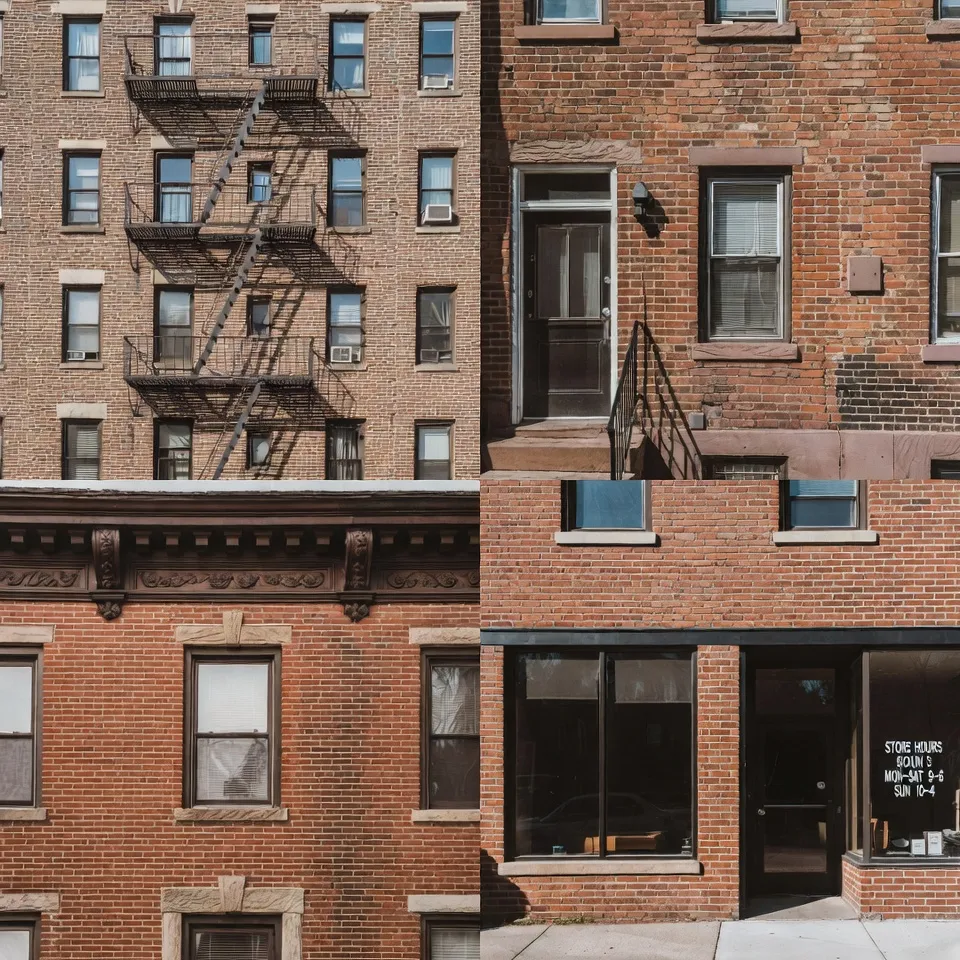
Brick Wall Types We Waterproof in New Jersey
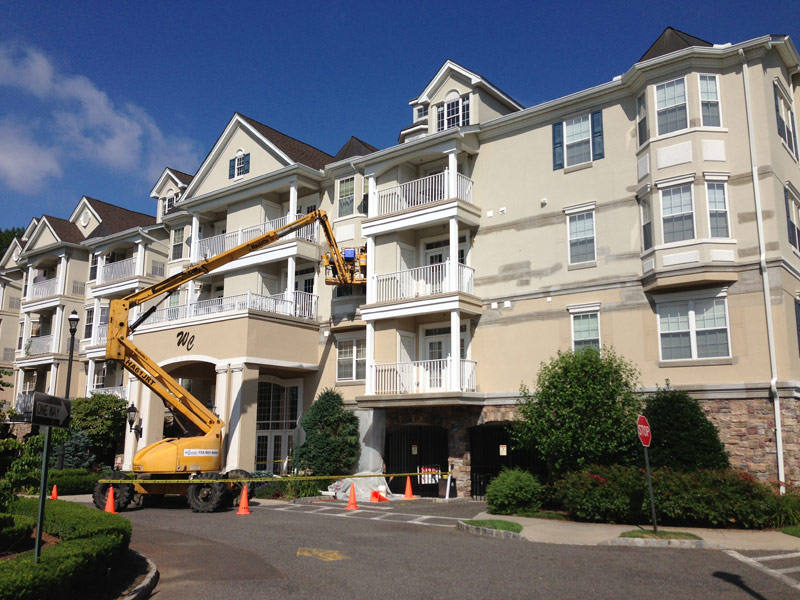
Apartment and Condo Buildings: Brick exterior walls on multi-unit buildings, sealed and repointed in coordination with property managers and boards, phased to limit resident disruption.
Single-Family and Townhouses: Brick homes with damp interior walls, efflorescence, or musty basements — sealed properly so homeowners stop fighting recurring moisture.
Commercial and Office Buildings: Brick facades and walls where moisture threatens interiors and tenant spaces, scheduled around business operations.
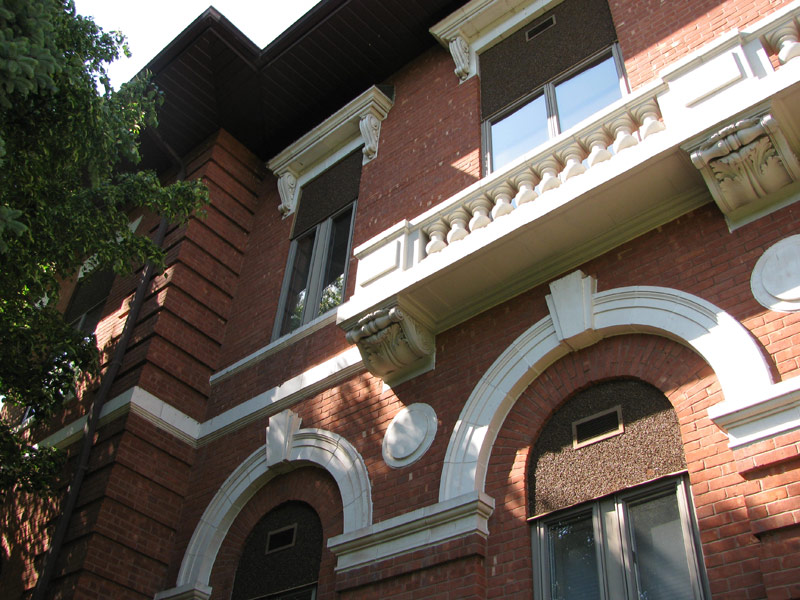
Historic and Pre-War Buildings: Soft older brick and lime mortar that demand breathable, compatible treatment — the wrong sealer destroys these walls, so we treat them with the right products and methods. Related sealing on full elevations is covered on our Facade Waterproofing page.
Industrial and Institutional Properties: Large brick wall surfaces on warehouses, schools, and municipal buildings, waterproofed efficiently across big footprints.
Why the Wrong Brick Sealer Does More Harm Than Good
This is the single most important thing to understand about waterproofing brick — and where most cheap jobs go badly wrong.
Brick walls need to breathe. A brick wall always holds some moisture, and it’s designed to release that moisture as vapor through its surface. Sealing it correctly means stopping liquid water from getting in while still letting vapor get out.
Non-breathable coatings trap water. Many hardware-store sealers and paints form a non-breathable film. They block surface water, but they also seal moisture inside the wall with no way out. That trapped water has to go somewhere.
Trapped moisture is destructive. Come winter, water sealed inside the brick freezes, expands, and spalls the face right off the brick. The “waterproofing” ends up causing the exact spalling and deterioration it was supposed to prevent.
Breathable repellents are the right answer. A proper penetrating repellent soaks into the brick and lines the pores so liquid water can’t enter, but water vapor still escapes. The wall stays dry inside and structurally sound.
Old and historic brick especially. Soft, older brick and lime mortar are the most vulnerable to a trapping sealer. Choosing the right breathable product isn’t optional on these walls — it’s the difference between protection and damage.
Waterproofing Brick Walls Throughout New Jersey
We seal brick walls on homes and buildings across northern and central NJ. We serve Bergen County, Hudson County, Essex County, Passaic County, Union County, Middlesex County, Morris County, and Monmouth County.
Towns we frequently work in: Paramus, Hackensack, Fort Lee, Englewood, Ridgewood, North Bergen, Jersey City, Hoboken, Newark, Montclair, Clifton, Paterson, Morristown, Edison, East Rutherford, and surrounding communities.
Not sure if we cover your area? Call (201) 338-4642 and we’ll let you know straight away.
Brick Wall Waterproofing Done the Way Brick Demands
Brick is unforgiving of shortcuts — the wrong sealer or skipped repointing doesn’t just fail, it actively damages the wall. Adriatic Restoration has been waterproofing brick across New Jersey since 1982. We’re a full masonry contractor first, so we repoint the joints, repair the brick, and choose breathable systems that protect the wall instead of suffocating it. Licensed, insured, and experienced with everything from row houses to historic facades.
That masonry-first approach is exactly why our brick waterproofing lasts. And because the same crew handles the repointing and brick repair, the whole job runs under one contract with no second contractor. For the full building envelope, see our complete Waterproofing services.
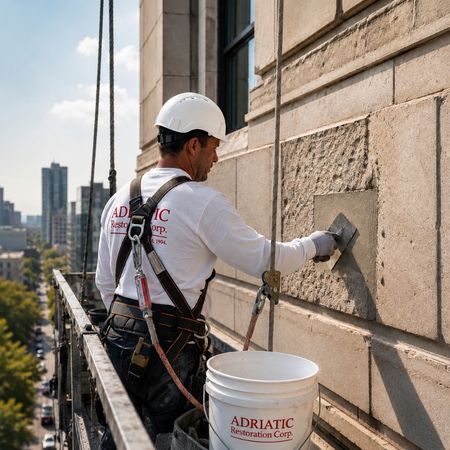
Recent Works


Questions We Hear Most - FAQs
Do brick walls really need waterproofing?
Yes — brick and mortar absorb water, which causes damp interior walls, mold behind the brick, and freeze-thaw deterioration over time.
Will sealing my brick trap moisture inside the wall?
Not with the right product. We use breathable penetrating repellents that block liquid water but let interior vapor escape, so moisture doesn’t get trapped.
Should the mortar be repointed before sealing?
Why is my interior wall damp if the brick looks fine?
How long does brick waterproofing last?
Keep Water Out of Your Brick — and Your Walls Dry
Brick only absorbs more water with every season left untreated. Get a free brick wall evaluation and a clear plan from the team sealing NJ brick since 1982.