Stucco has been finishing walls for centuries — and it’s still one of the most widely used exterior cladding materials in construction today. Whether you’ve seen it on a classic Spanish-style home or a modern commercial building, stucco delivers a seamless, durable finish that’s hard to replicate with other materials. But what exactly is it, and why does it remain so popular?
What Is Stucco?
Stucco is a cement-based plaster applied as a surface coating on exterior walls, interior ceilings, and building facades. It’s made from Portland cement, sand, lime, and water — mixed together, applied wet, and left to harden into a dense, durable shell that protects and finishes a structure. One of the oldest building materials still in active use today, stucco bonds to wood-frame construction, concrete block, brick, and masonry, making it one of the most versatile exterior finishes in construction.
Stucco Definition & Meaning
By definition, stucco is a cement-based plaster applied as a surface coating on walls and ceilings. The word itself traces back to the Italian stucco and Old High German stucchi, meaning “crust” — an apt description for a material that forms a hard, protective shell over whatever it covers.
In construction, a standard stucco mix consists of Portland cement, sand, lime, and water. These are combined on-site, applied wet, and left to cure into a dense, weather-resistant surface. The lime improves workability, the cement provides strength, and the sand adds body and controls shrinkage. In the CSI MasterFormat, stucco is classified under Division 09 — Finishes.
What’s Actually Inside a Stucco Wall?
Most people only see the finished surface, but a stucco wall is a layered system with several components working together. Directly against the structural wall sits a water-resistant barrier — typically building paper or house wrap. Over that, metal lath is fastened to give the stucco something to grip mechanically. At the base of the wall, a weep screed allows any moisture that penetrates the surface to drain out rather than accumulate against the framing.
On masonry or concrete block construction, the lath is skipped entirely — a bonding agent is brushed on and the stucco goes directly onto the prepared surface.
How Stucco Is Applied: The Coat System
Stucco is built up in layers, and each one has a specific role.
The scratch coat is pressed into the metal lath first, then scored with a notched tool to create a rough surface for the next layer to bond to. The brown coat follows once the scratch coat has cured — this is the thickest layer and brings the wall to a flat, even plane. Finally, the finish coat (also called the color coat) gives the surface its texture and appearance.
This full sequence is called a 3-coat stucco system. A 2-coat system is used directly over solid masonry, where the scratch coat step is unnecessary. Sometimes a fog coat — a thin cement-and-pigment slurry — is applied over an existing finish to refresh faded color without a full recoat.
Types of Stucco
Traditional Hard Coat Stucco The original cement-lime-sand system applied over metal lath. It’s heavy, extremely durable, and when properly installed with correct flashing and weep screeds, it can last 50 years or more. This is the standard for both masonry and wood-frame construction.
Acrylic (Synthetic) Stucco Acrylic stucco replaces the cement-lime base with acrylic resin. It dries faster, is more flexible, resists cracking better, and comes pre-tinted in a wide range of colors. It’s most commonly used as the finish coat over a traditional base system.
EIFS — Exterior Insulation and Finish System EIFS is a multi-layer system that includes a foam insulation board beneath the stucco layers. The key difference between EIFS and traditional stucco is how moisture is managed — hard coat stucco is a drainage system where any water that gets in can escape through the weep screed, while EIFS is a barrier system that relies entirely on sealants to keep moisture out. EIFS performs better thermally but carries higher risk if flashing or sealants are compromised.
Pebble Dash & Spanish Stucco Pebble dash is a decorative finish where small stones are pressed into a wet base coat, creating a rough, heavily textured surface. Spanish stucco refers to a hand-troweled finish with irregular, flowing patterns — closely associated with Mediterranean and Mission Revival architecture.
Stucco Colors and Painting
In its natural state, stucco dries to an off-white or light gray tone. From there, it’s highly customizable — mineral pigments can be blended directly into the finish coat during mixing, or the surface can be painted after curing. Elastomeric masonry paint is the best option for stucco because it’s flexible enough to bridge hairline cracks and forms a waterproof membrane over the surface.
What Is Stucco Used For?
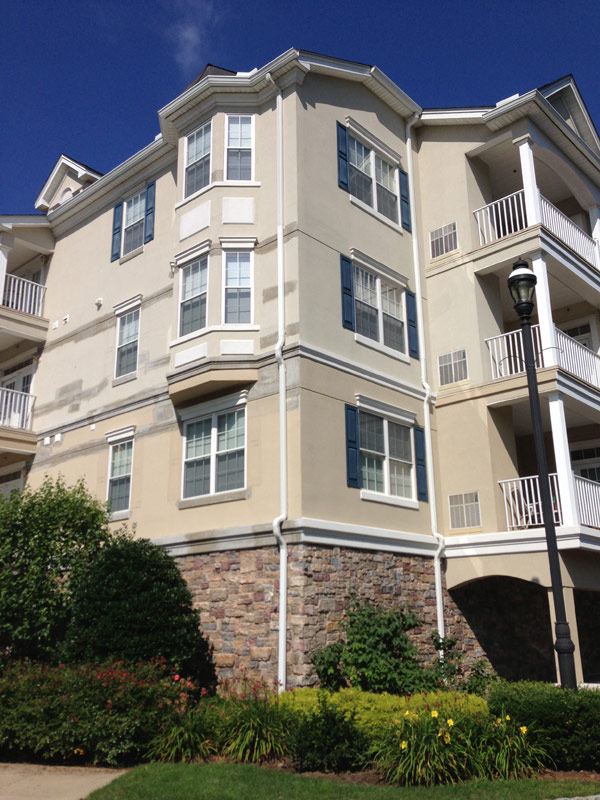
On residential buildings, stucco serves as exterior siding — acting as the primary weather barrier against rain, wind, UV, and pests. It’s also widely used on interior ceilings for decorative texture. In commercial construction, it appears on retail facades, hotels, and institutional buildings. Historically, stucco was used as a sculpting medium for architectural ornamentation — cornices, moldings, arched reliefs, and decorative panels on building facades.
It bonds to wood-frame construction, concrete block, brick, and masonry, making it one of the most adaptable exterior finishes available.
Stucco Inspection and Remediation
A professional stucco inspection assesses the wall system for cracks, moisture intrusion, and flashing failures around windows and doors. Inspectors often use moisture meters or thermal imaging to find water damage that isn’t visible from the surface.
Stucco remediation is a more involved process — it means removing compromised stucco, repairing any underlying water or structural damage, and re-cladding the wall correctly. This is different from a routine stucco repair, which patches isolated cracks or damaged sections without disturbing the full system. If moisture has been present behind the wall for an extended period, remediation — not a patch job — is usually necessary.
Stucco vs. Plaster vs. Siding
Stucco and plaster share ingredients but serve different environments. Stucco is engineered for exterior use — higher cement content, built for weather exposure and thermal movement. Interior plaster is typically gypsum-based, mixed finer and smoother, and not designed to handle outdoor conditions.
Against fiber cement siding, stucco offers better fire resistance and a more seamless aesthetic, particularly on masonry construction. Fiber cement is easier and cheaper to replace in sections and holds up more consistently in high-moisture climates. In dry climates, a properly installed stucco exterior is difficult to beat for longevity and curb appeal.
Stucco & EIFS Repair for NJ Commercial Buildings
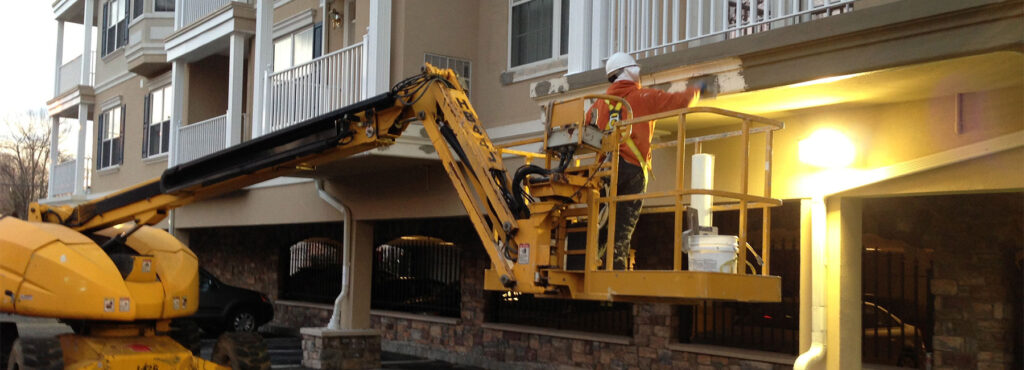
If your commercial building’s stucco or EIFS is cracking, bubbling, or showing water damage, Adriatic Restoration provides expert repair and remediation services across New Jersey.
Frequently Asked Questions
What is a scratch coat in stucco?
The scratch coat is the first layer applied in a three-coat stucco system. It’s pressed into the metal lath and then scored with a notched tool so the brown coat has a rough surface to bond to properly.
What is the difference between EIFS and regular stucco?
Traditional stucco is a drainage-based system — any moisture that enters can escape through weep screeds. EIFS relies on sealants to keep water out entirely and includes a foam insulation layer. EIFS insulates better but is more vulnerable if its moisture barrier fails.
What is behind the stucco on a house?
Behind exterior stucco you’ll find metal lath, a water-resistant barrier (building paper or house wrap), and the structural wall — either wood framing, concrete block, or masonry.
What is a stucco inspection and when do you need one?
A stucco inspection checks the wall system for moisture intrusion, cracking, and flashing failures. It’s recommended before buying a stucco home or if you notice staining, soft spots, or cracks around windows and doors.
What is stucco remediation vs. stucco repair?
Repair patches isolated cracks or damaged areas. Remediation involves removing the entire stucco system, fixing water damage behind the wall, and reinstalling everything correctly — necessary when moisture has penetrated deeply.
What color is stucco naturally, and can it be painted?
Fresh stucco dries to an off-white or light gray. It can be custom-tinted during mixing or painted afterward with elastomeric masonry paint for the best adhesion and crack bridging.
Is stucco better than siding?
In dry climates, stucco outperforms most siding options for fire resistance, longevity, and seamless aesthetics. In wet climates, fiber cement siding is often more forgiving and easier to maintain. The right choice depends on your climate and wall construction type.