
Facade Waterproofing Services in New Jersey
Breathable sealers, joint restoration, and flashing repair that keep wind-driven rain out of brick, masonry, and stucco facades across NJ.
Your Facade Is the Building's First Line of Defense
A facade takes the full force of every nor’easter — wind-driven rain hits it horizontally, not just from above. Once water gets behind the brick or stucco, it rusts steel, rots framing, and stains interior walls floors below the actual entry point. NJ’s freeze-thaw winters then turn every wet joint into a cracked one. Adriatic Restoration has been waterproofing facades across New Jersey since 1982.
Our Facade Waterproofing Services
Everything a leaking facade needs, handled by one crew:
- Breathable penetrating sealer application (brick, block, stone)
- Elastomeric and waterproof facade coatings
- Mortar joint repointing before sealing — see Masonry Repair
- Caulking and sealant replacement at windows and joints
- Through-wall flashing repair and replacement
- Lintel and sill waterproofing detailing
- Stucco crack sealing and recoating — see Stucco Repair
- Expansion and control joint restoration
- Parapet and coping cap waterproofing
- Water testing and facade leak investigation
- Efflorescence treatment and moisture-source correction
- Facade condition surveys and reports
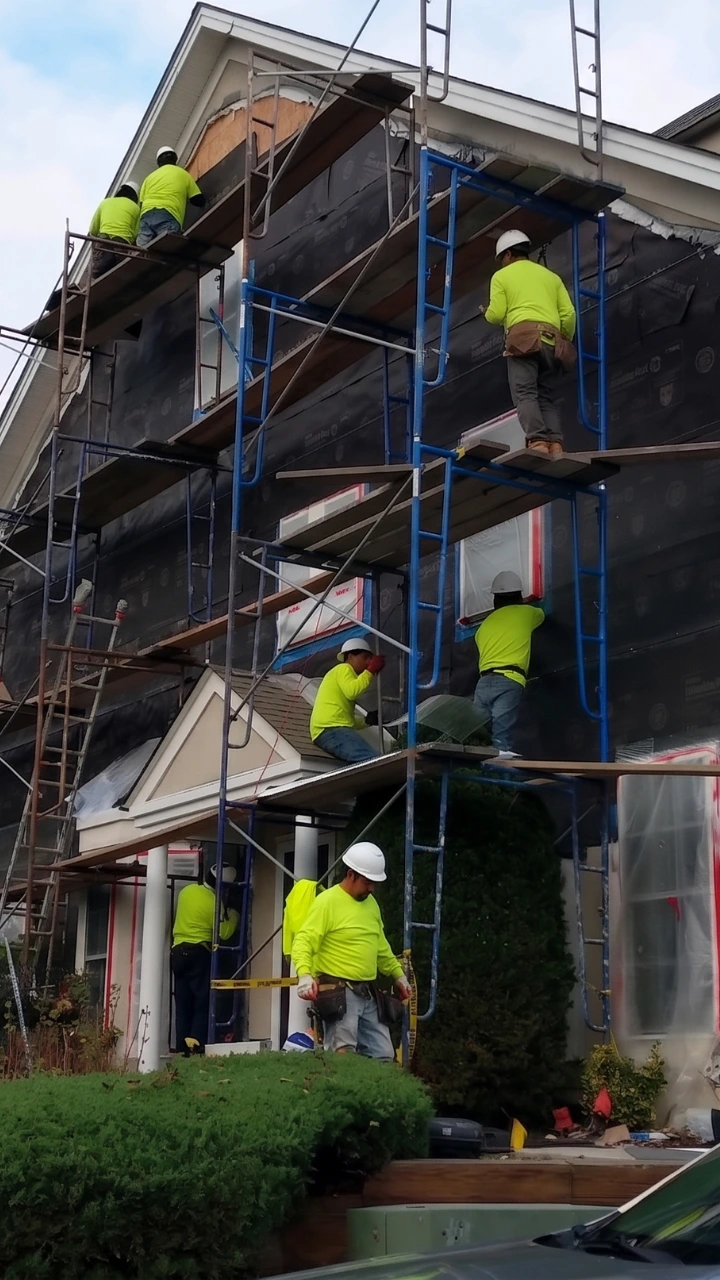
How We Take a Facade From Leaking to Sealed
Step 1: Trace the Leak to Its True Source
Facade leaks are deceptive — water entering at a tenth-floor lintel can stain a seventh-floor ceiling. We inspect the wall up close, run controlled water testing where needed, and map every entry point. You then get a written scope with exact pricing, covering only what your facade actually needs.
Step 2: Restore the Wall Before Sealing It
A sealer over failed joints is wasted money — so restoration comes first. We repoint deteriorated mortar, replace failed caulk and flashing, and repair cracked brick or stucco so the facade is structurally sound. Where damage runs deeper, our Facade Restoration team handles it within the same project.
Step 3: Seal It Breathable, Detail It Right
We apply the system matched to your wall — penetrating sealer for sound masonry, elastomeric coating where movement demands it — always breathable so trapped moisture can escape. Every window head, joint, and termination gets hand detailing, then we verify the result and walk the finished facade with you.
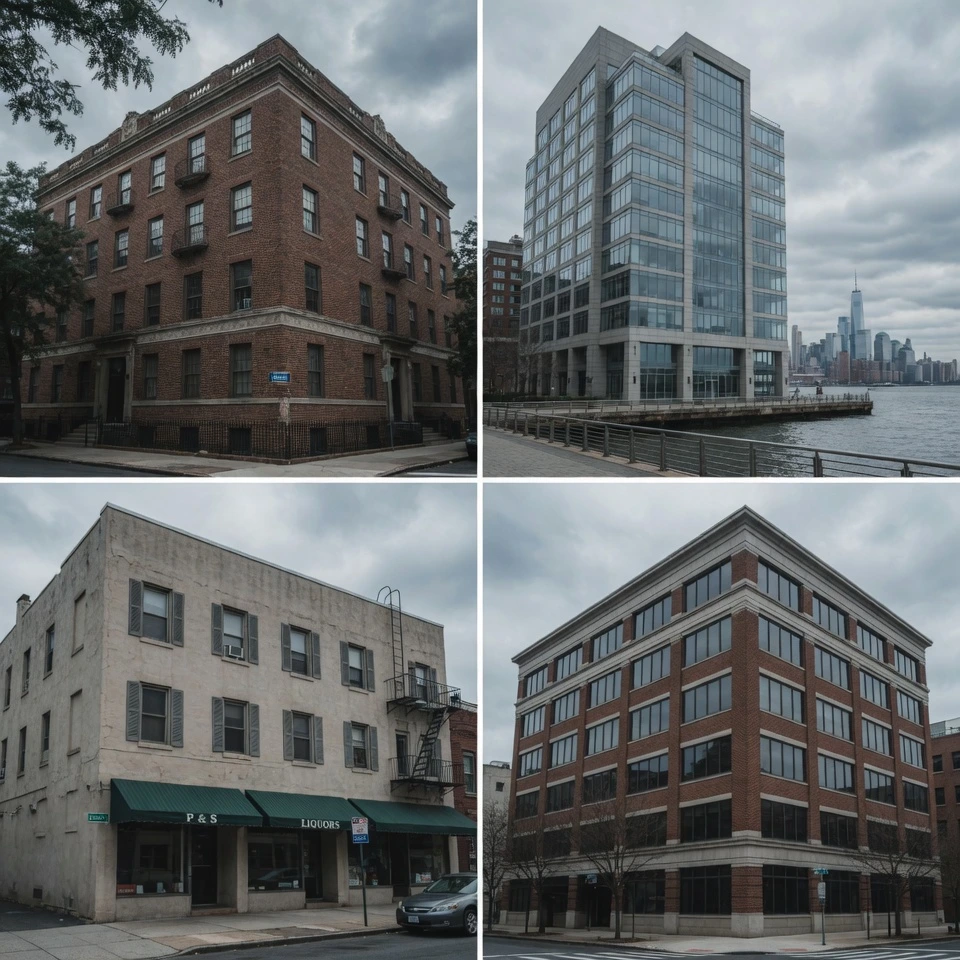
From Walk-Ups to High-Rises: Facades We Waterproof
Apartment and Condo Buildings: Full-elevation facade sealing programs coordinated with boards and managers — phased by elevation so residents and budgets aren’t hit all at once.
High-Rise Towers: Swing stages, rope access, and crews experienced at height. We handle complete facade waterproofing on towers in Jersey City, Hoboken, Fort Lee, and along the Hudson waterfront.
Commercial and Office Buildings: Leaking facades damage tenant spaces and reputations. We schedule sealing and joint work around business hours with minimal disruption to entrances and sidewalks.
Historic and Pre-War Buildings: Old brick needs breathable, lime-compatible treatment — the wrong coating traps moisture and destroys the wall it was meant to protect. We seal historic facades without changing their appearance.
Mixed-Use and Retail Properties: Storefront-over-residential buildings where facade leaks affect multiple owners. We coordinate access, protect storefronts, and keep retail operations running through the work.
The Five Places NJ Facades Let Water In
Mortar joints. Mortar is the sacrificial part of a brick wall — it’s designed to wear before the brick does. Recessed, cracked, or crumbling joints are the #1 entry point on NJ facades, and no sealer fixes a joint that needs repointing.
Window perimeters. The caulk line where the facade meets each window frame fails years before the wall does. Hundreds of linear feet of aging sealant means hundreds of feet of potential leaks.
Lintels and sills. Steel lintels rust, expand, and crack the masonry above windows — opening direct water paths. Sloped sills with failed end dams quietly funnel water into the wall instead of away from it.
Failed flashing. Through-wall flashing is supposed to catch water inside the wall and send it back out. When it’s corroded, torn, or was never installed properly, water travels down inside the facade for floors before appearing.
Hairline stucco and masonry cracks. Individually harmless looking — but wind-driven rain pressurizes against the facade and pushes water through openings far smaller than you’d expect. Freeze-thaw then grows every crack each winter.
Sealing Facades From the Hudson Waterfront to Morris County
Facade waterproofing is one of the most common projects we handle across northern and central NJ. We serve Bergen County, Hudson County, Essex County, Passaic County, Union County, Middlesex County, Morris County, and Monmouth County.
Towns we frequently work in: Paramus, Hackensack, Fort Lee, Englewood, Ridgewood, North Bergen, Jersey City, Hoboken, Newark, Montclair, Clifton, Paterson, Morristown, Edison, East Rutherford, and surrounding communities.
Not sure if we cover your area? Call (201) 338-4642 and we’ll let you know straight away.
A Masonry Contractor That Waterproofs — Not the Other Way Around
Most facade sealing failures happen because a coating company sprayed over a wall that needed repair. Adriatic Restoration is a full masonry and restoration contractor first — we’ve been repairing and sealing NJ facades since 1982, so we fix the joints, flashing, and cracks before any product goes on. Licensed, insured, and equipped for everything from walk-ups to high-rise swing-stage work.
That also means one contract covers the whole job. If sealing reveals deteriorated brick, failed lintels, or damaged stucco, the same crew handles it — no second contractor, no finger-pointing, no schedule gaps. For full-envelope protection including balconies and foundations, see our complete Waterproofing services.
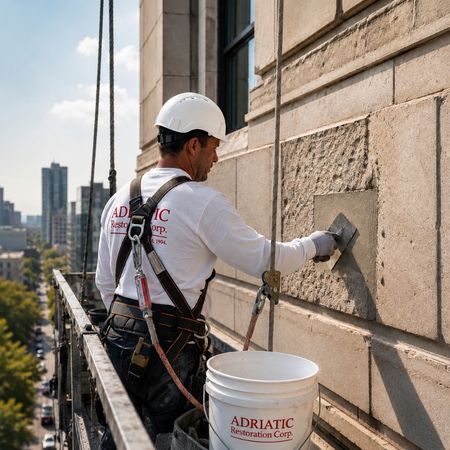
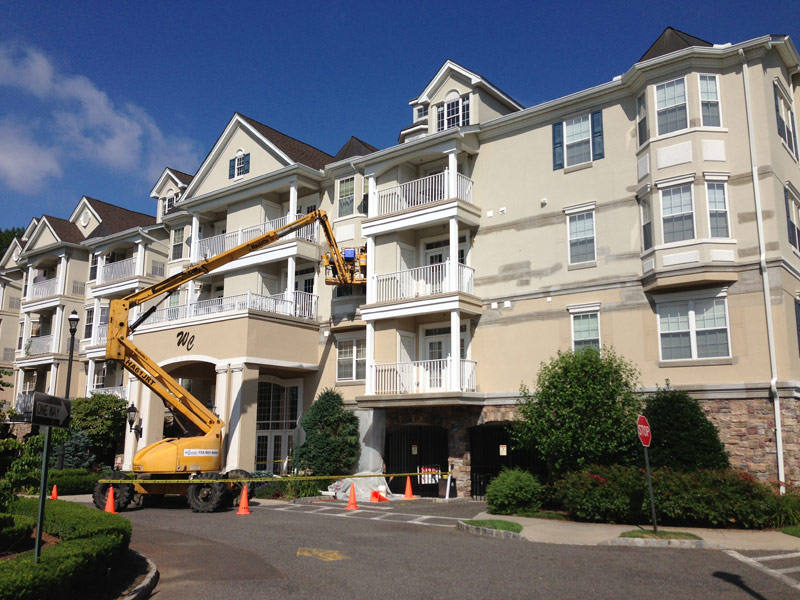
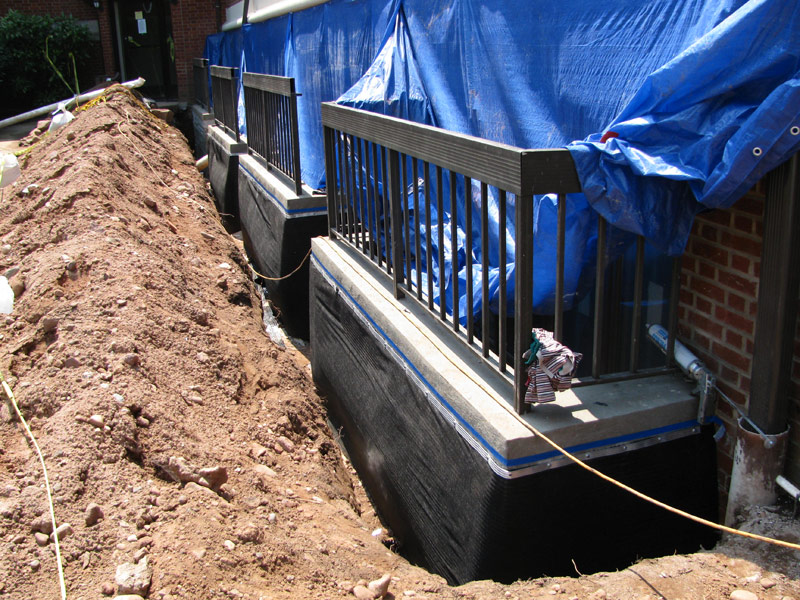
Recent Works


Frequently Asked Questions
How do I know if my facade needs waterproofing?
Interior stains after wind-driven rain, efflorescence (white deposits), damp brick that stays dark, or crumbling joints all mean water is getting in.
Does sealing brick stop facade leaks?
How long does facade sealing last?
Will waterproofing change how my facade looks?
Penetrating sealers are invisible once cured. Coatings add color and can be matched — we confirm the finish with samples before full application.
Can you waterproof just one wall or elevation?
Don't Let One More Storm Soak Into Your Walls
Get a free facade inspection and a straight answer on what your building needs — from the team sealing NJ facades since 1982.