EIFS Stucco Repair Services in New Jersey
EIFS Problems Get Worse Fast When Left Alone
EIFS (Exterior Insulation and Finish System) is one of the most energy-efficient cladding systems available, but it is also one of the least forgiving when maintenance is deferred. A crack in the finish coat or a failed sealant joint lets water behind the system, where it has nowhere to go. That trapped moisture damages the substrate, breeds mold, and compromises the insulation board before any visible damage appears on the surface. Adriatic Restoration has been repairing EIFS systems across New Jersey since 1982.
Our EIFS Stucco Repair Services
Complete EIFS repair and restoration for every failure type, handled by one crew:
- EIFS crack repair and finish coat patching
- Delaminated EIFS panel removal and reinstallation
- Water intrusion investigation and remediation
- Substrate damage repair behind failed EIFS
- EIFS sealant and joint replacement at windows and penetrations
- Base coat repair and recoating
- Finish coat color and texture matching
- Flashing repair and integration with EIFS system
- Full EIFS section removal and replacement
- EIFS condition surveys and moisture testing
- Mold remediation coordination behind EIFS
- Transition detailing between EIFS and other cladding systems
- EIFS maintenance programs see Facade Maintenance
Three Steps to Properly Repaired EIFS
Step 1: Find the Water Before Fixing the Surface
EIFS repairs that fail quickly almost always skip this step. We probe the system for delamination, use moisture testing to map where water has traveled behind the cladding, and inspect every sealant joint and transition detail before recommending any repair scope. You get a written assessment with exact pricing based on actual conditions, not a visual estimate.
Step 2: Remove What Is Compromised, Repair What Is Sound
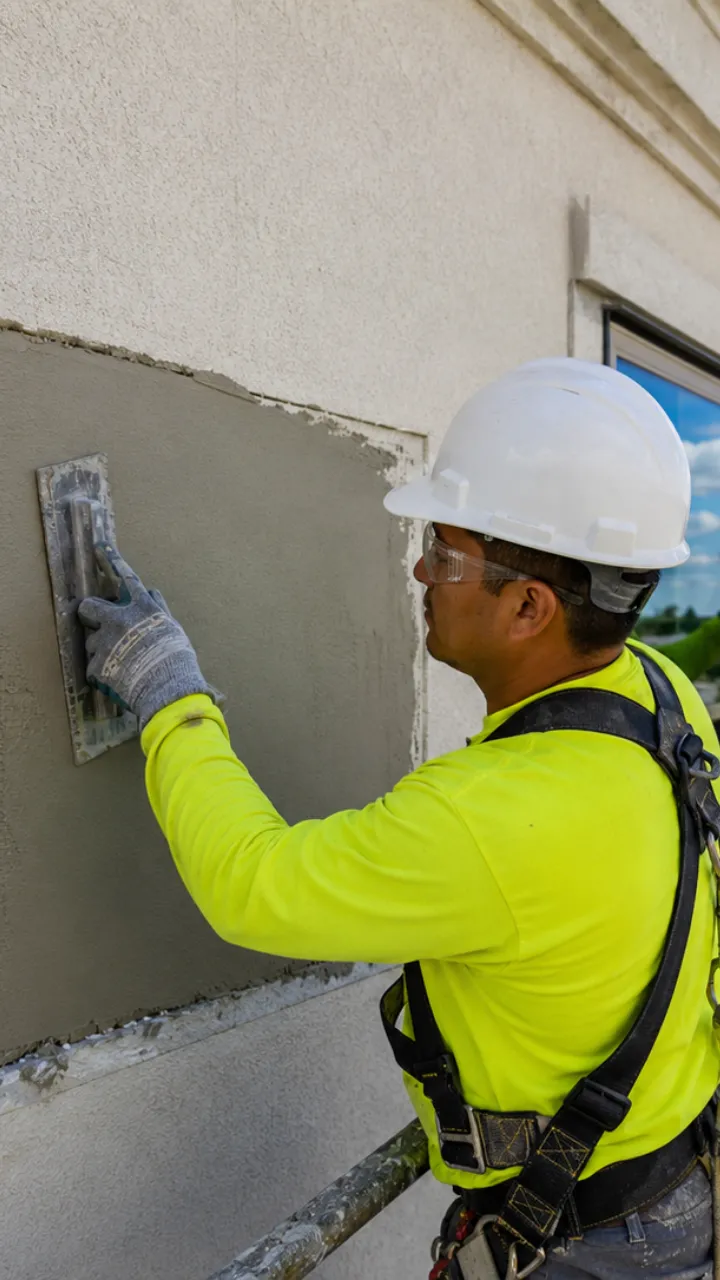
Patching over wet or delaminated EIFS traps the problem inside the wall. We remove damaged sections back to sound substrate, dry out and repair any affected sheathing or framing, reinstall new insulation board and base coat, and apply finish coat matched to the original texture and color. Every sealant joint gets replaced with the right product for EIFS compatibility.
Step 3: Seal the System and Detail Every Transition
Most EIFS failures start at the details: window perimeters, penetrations, transitions to other cladding, and terminations at grade. We rebuild these details with EIFS-compatible sealants and flashing so the repaired system performs as a complete water management assembly, then verify the work and walk it with you before closeout.
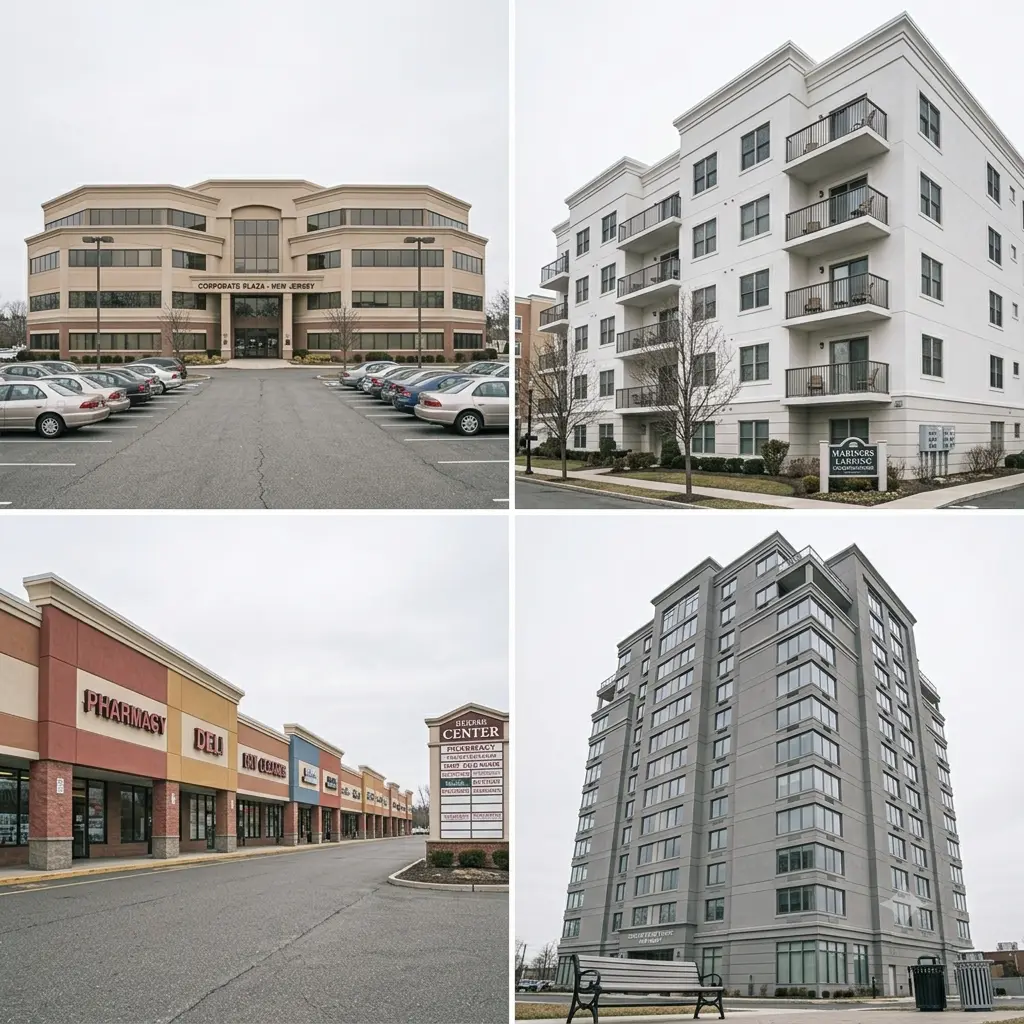
Buildings With EIFS We Repair Across New Jersey
Commercial Office Buildings: EIFS became a popular choice for office construction in the 1980s and 1990s, and those systems are now at the age where delamination and water intrusion are common findings.
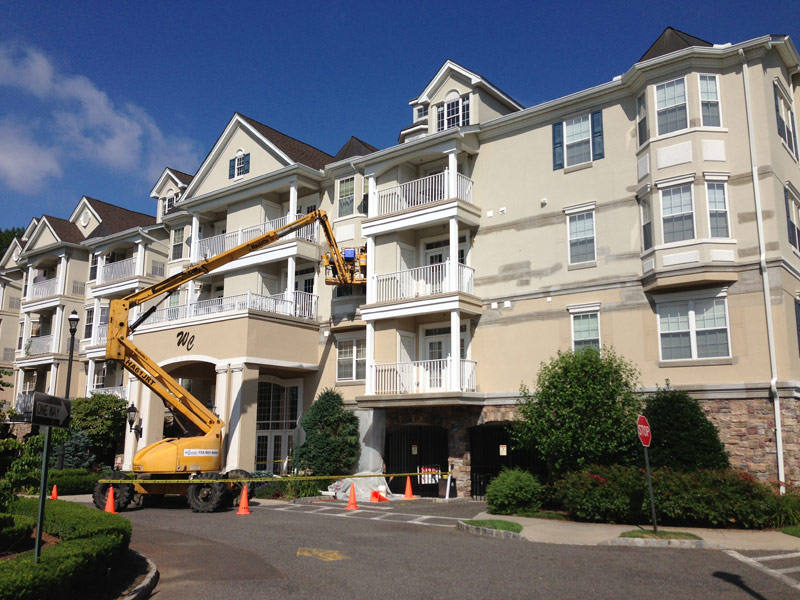
Condominium and Apartment Buildings: Multi-unit buildings with full EIFS envelopes, where one failing section can indicate system-wide sealant failure that affects every elevation.
Retail and Mixed-Use Properties: Storefront and podium EIFS on mixed-use buildings, where water intrusion affects both the exterior appearance and the interior tenant spaces behind it.
High-Rise Residential Towers: Full EIFS envelope restoration on tall buildings, with swing stage and rigging access and phased scheduling around residents and building operations.
Institutional and Educational Buildings: Schools and municipal buildings with aging EIFS systems that need thorough assessment, section replacement, and full sealant renewal programs.
Why EIFS Fails Differently Than Traditional Stucco
Understanding the difference is key to fixing it correctly. EIFS and traditional stucco look similar from the street, but they fail in completely different ways. For traditional stucco repair, see our Stucco Repair page.
EIFS is a barrier system, not a drainage system. Traditional stucco is porous and allows some moisture to move through it. EIFS relies on a continuous barrier at the face of the system to keep all water out. When that barrier is breached at any point, water is behind a system with no designed path to drain.
The damage hides behind the surface. Traditional stucco damage is usually visible as staining, cracking, or efflorescence. EIFS damage often stays completely invisible on the face while the substrate behind it deteriorates for months or years. Soft spots, a hollow sound when tapped, and moisture readings are the clues.
The sealant joints are the weak link. Unlike a masonry wall where the cladding itself can tolerate some movement, EIFS relies heavily on sealant joints at windows, penetrations, and transitions to keep water out. When those joints fail, the whole premise of the barrier system fails with them.
Repairs need texture and color matching. A masonry patch blends in naturally. An EIFS patch in the wrong texture or color is immediately visible. Proper EIFS repair requires matching the original finish coat system, which takes skill and the right materials.
Substrate damage changes the scope. On a masonry wall, repair is usually limited to the cladding. On an EIFS building, water intrusion often reaches the sheathing and framing behind it. Scope creep is common and expected on EIFS jobs, which is why our moisture assessment comes before any pricing.
EIFS Stucco Repair Throughout New Jersey
Our EIFS repair crews work on buildings throughout northern and central NJ. We serve Bergen County, Hudson County, Essex County, Passaic County, Union County, Middlesex County, Morris County, and Monmouth County.
Towns we frequently work in: Paramus, Hackensack, Fort Lee, Englewood, Ridgewood, North Bergen, Jersey City, Hoboken, Newark, Montclair, Clifton, Paterson, Morristown, Edison, East Rutherford, and surrounding communities.
Not sure if we cover your area? Call (201) 338-4642 and we’ll let you know straight away.
EIFS Repair Contractors Who Start With the Moisture, Not the Surface
Most EIFS patches fail because the contractor never looked behind the surface. Adriatic Restoration has been repairing EIFS systems across New Jersey since 1982. We’re licensed, insured, and we moisture-test before we scope, which means the repair we quote covers what actually needs to be fixed, not just what’s visible from the sidewalk.
Our finish coat matching is a point of pride. We carry an extensive range of textures and colors and will produce samples for your approval before any patching goes on. For full facade-level work beyond EIFS repair, our Facade and Building Restoration team handles the complete scope under one contract.
Recent Works