
Concrete Facade Restoration & Spalling Repair in New Jersey
When Concrete Fails, It's Usually the Steel Inside That's Dying
A crack in concrete seems small. Then the concrete starts to bulge. Chunks fall off. You see rust stains on the surface. By then, the steel reinforcement inside has been corroding for months or years, and the damage spread faster than anyone expected. This is what happens in every parking garage eventually, on every concrete balcony that isn’t maintained, and on many commercial facades in New Jersey. We repair it before the building becomes unsafe.
What We Fix in Concrete Facades
We handle the structural problems that mortar repair and stucco patching cannot solve.
- Rebar corrosion and exposed steel reinforcement
- Concrete spalling and delamination removal and repair
- Structural concrete restoration on columns, beams, and load-bearing walls
- Concrete balcony repair and waterproofing (see our high-rise balcony work)
- Parking deck and garage concrete repair
- Concrete panel and precast element repair or replacement
- Concrete crack injection with epoxy and polyurethane systems
- Concrete surface preparation and protective coating application
- Concrete substrate cleaning (removing stains, efflorescence, biological growth)
- Expansion joint repair and rebuilding
- Concrete resurfacing and skim coating for failed slabs
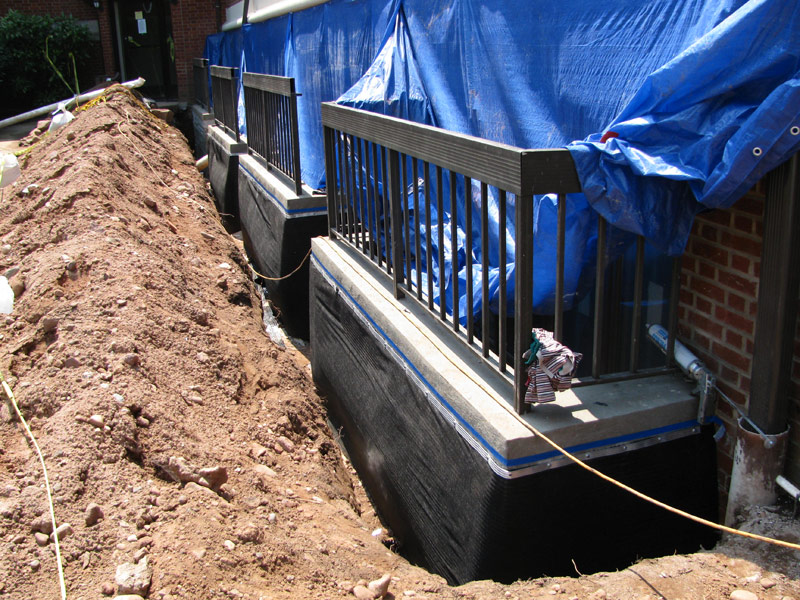
- Below-grade concrete and foundation restoration (see foundation waterproofing options)
- Mixed-material facade repair where concrete meets stucco or EIFS
How We Repair Concrete Damage
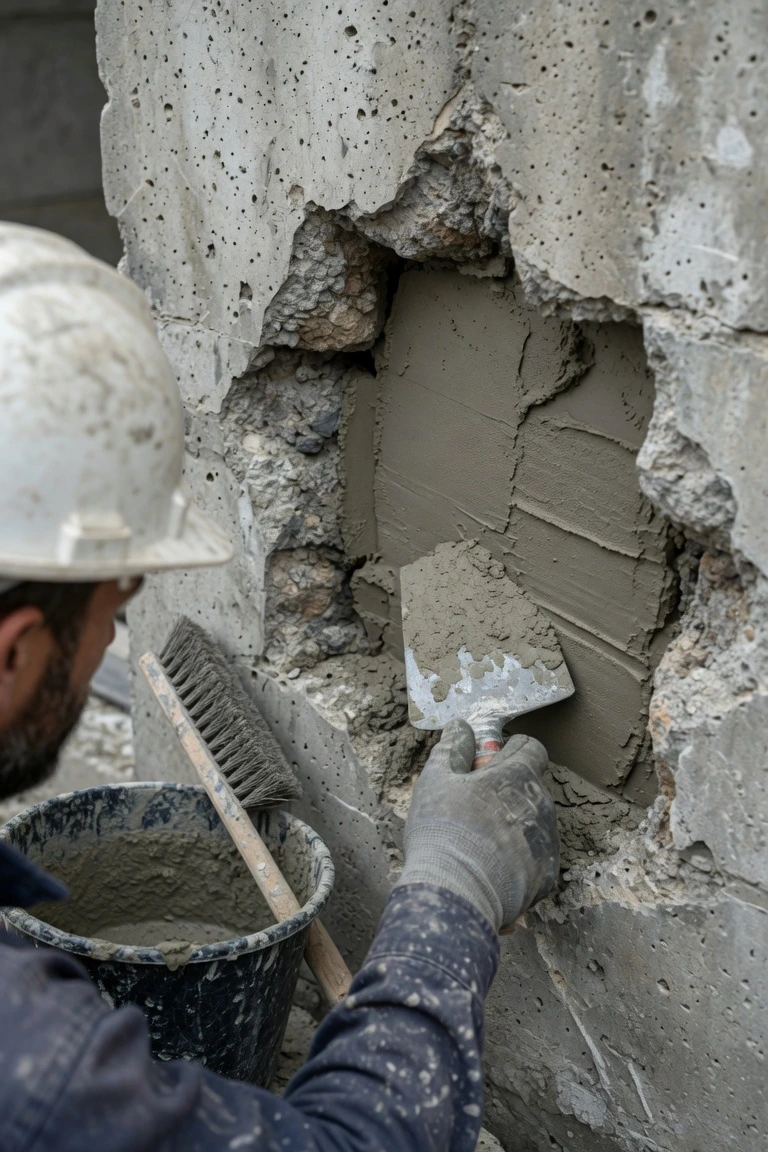
Step 1: Sound the Facade and Find What's Really Broken
Solid-sounding concrete can hide cavity damage underneath. We sound walls, use moisture meters, and visually inspect for signs that corrosion has spread beyond the visible crack or spall. Sometimes one small spot means a whole wall is at risk. We identify that before repair work starts, so you are not paying for patch repairs that will fail next year.
Step 2: Remove Unsound Concrete and Treat Active Corrosion
Once we know where the damage is, we remove all the concrete that has lost bond or that surrounds corroded steel. This is not quick. Leaving deteriorated concrete or corroded rebar in place means the repair fails within a few years. We clean exposed steel with wire brushing, apply a corrosion inhibitor, and then a bonding primer before any new concrete touches the steel.
Step 3: Rebuild With the Right Material for the Exposure
Not all concrete repair materials are the same. High-chloride environments (parking garages, coastal areas, roads treated with salt) need concrete or repair mortar that resists salt attack. We select materials based on your building's actual exposure, then place and finish repairs to match the surrounding surface.
Buildings We Keep From Falling Apart Across New Jersey
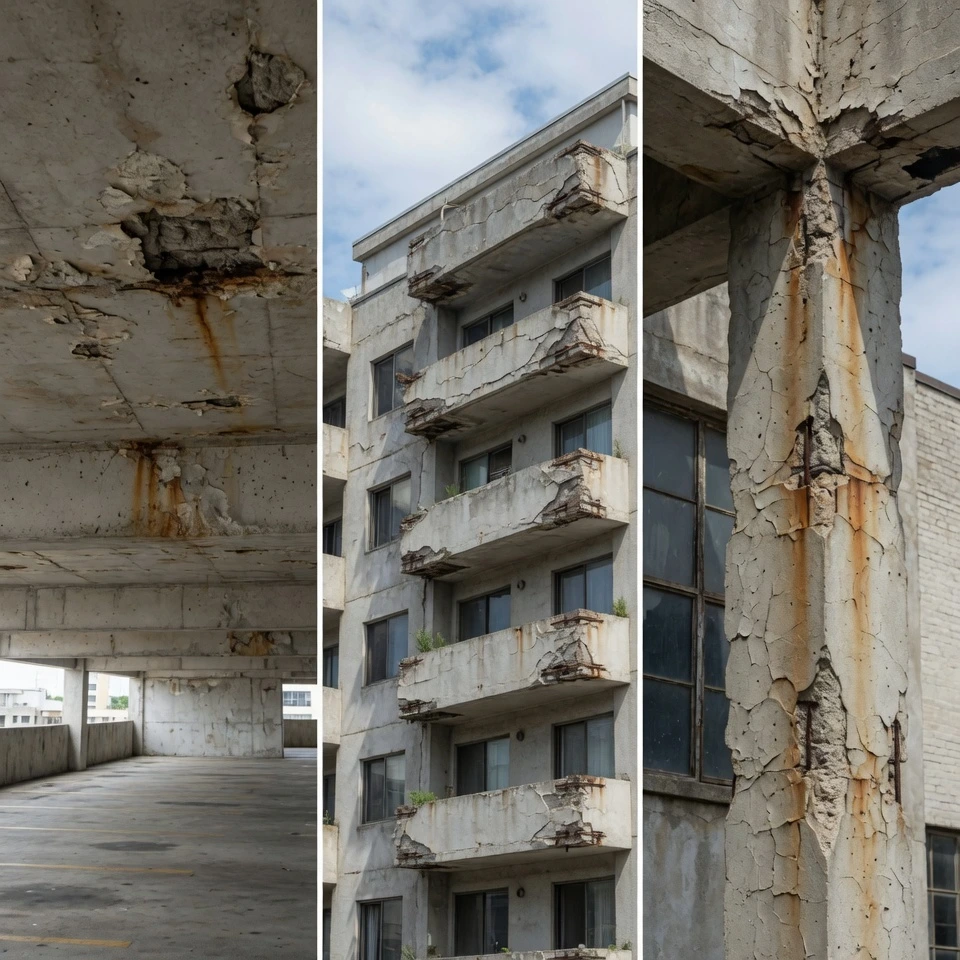
Parking Structures & Garages: Concrete decks absorb road salt, vehicle fluids, and water. The steel inside corrodes relentlessly. Every parking structure we work on has some level of spalling or delamination. Early repair keeps it safe and adds decades to the structure’s life.
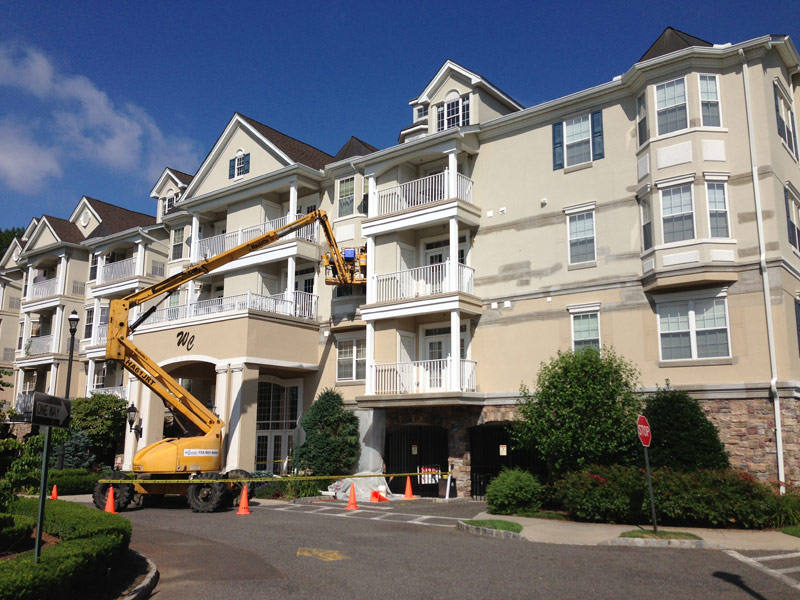
Apartment & Condo Balconies: Concrete balconies collect water in corners and joints. After a few freeze-thaw cycles, the concrete breaks down and the rebar starts to rust. Residents notice cracking and stains. Property managers call us before someone gets hurt. We repair balconies before failure becomes dangerous, see our detailed high-rise balcony restoration service.
Commercial & Office Buildings: Concrete columns, spandrels, and facade panels on commercial buildings are exposed to weather and sunlight. UV damage, water infiltration, and age all take their toll. We repair facades to maintain appearance and prevent water damage inside the building.
Institutional Buildings: Schools, hospitals, municipal buildings, and courthouses often have aging concrete structures that need repairs to stay compliant and safe.
Post-Tensioned & Structural Concrete: Some buildings have post-tensioned slabs or complex structural systems. We work with structural engineers on these projects to ensure repairs maintain the system’s integrity.
Spotting Concrete Damage Before It Becomes Dangerous
Visible Spalling Concrete that is broken or missing in chunks. This is the last stage. The rebar has usually been corroding for years before visible spalling shows up.
Rust Stains Brownish or orange streaks running down the facade from cracks or joints. This is active corrosion happening right now.
Bulging or Heaving Concrete that looks swollen or pushed outward. The rebar underneath is rusting and expanding, pushing the concrete out from inside.
Cracking Not all cracks are cosmetic. Diagonal cracks, horizontal cracks around rebar locations, and widening cracks all suggest structural movement or corrosion.
Spalling at Joints Concrete breaking away specifically at control joints and expansion joints. Water sits in these areas and corrodes the steel underneath.
Soft Spots Concrete that sounds hollow when tapped or feels soft or crumbly to the touch. The substrate is failing.
Professional Concrete Restoration Across New Jersey
Adriatic Restoration provides professional concrete restoration services throughout New Jersey, serving commercial, industrial, institutional, and multi-family properties across Bergen County, Hudson County, Essex County, Passaic County, Union County, Middlesex County, Morris County, and Monmouth County.
Our crews regularly complete concrete restoration projects in Paramus, Hackensack, Fort Lee, Englewood, Ridgewood, North Bergen, Jersey City, Hoboken, Newark, Montclair, Clifton, Paterson, Morristown, Edison, East Rutherford, and surrounding New Jersey communities.
If your property is located anywhere in New Jersey and you’re unsure whether we service your area, call (201) 338-4642. We’ll be happy to confirm coverage and discuss your concrete restoration project.
Why Concrete Repair Fails Without Treating the Rebar
A lot of contractors patch concrete by removing the spalled area and putting new concrete back in without addressing the corroded steel. The new repair bonds to rusty steel. The rust keeps spreading. Two or three years later, the same spot spalls again, or new spalls appear nearby. This is not a repair, it is a temporary patch.
We treat active corrosion with a corrosion inhibitor, clean the steel properly, and apply a bonding primer before new concrete. This stops the rust and gives the repair a chance to actually last. It costs more than just patching the hole, but it saves you from calling us back in three years.
We’re licensed and insured, and we work with structural engineers on complex repairs to ensure the fix is sound and permanent.
Recent Works


Frequently Asked Questions
How do I know if concrete spalling is a structural safety issue?
Why does concrete crack in freeze-thaw climates like New Jersey?
Can corroded rebar be saved, or does it need replacement?
How long will a concrete repair last if done right?
Do you offer emergency concrete repair?
Get a Free Concrete Inspection Before Spalling Spreads
Contact a New Jersey concrete restoration contractor with 40+ years repairing structures that other contractors told property managers were finished.