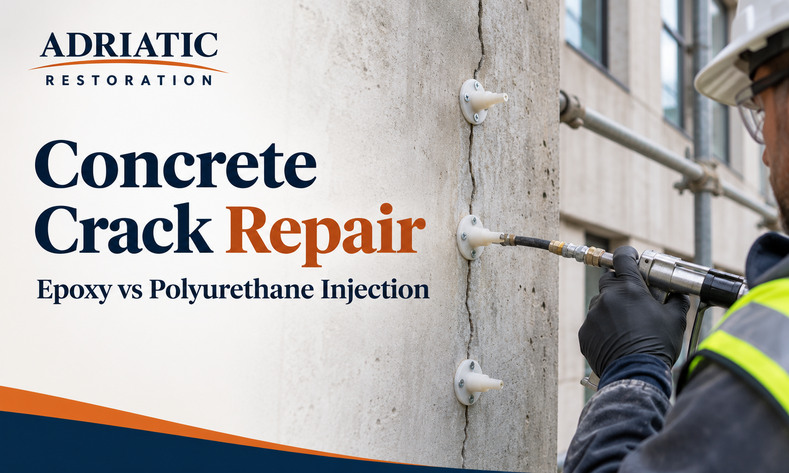
Epoxy and polyurethane can enter a concrete crack, but the intended result differs. Structural epoxy can bond suitable crack faces. Polyurethane injection grout commonly addresses water passage, with the selected formula suited to the leak conditions.
Concrete crack repair starts with the cause and the repair objective. A dry crack in a sound beam needs a different assessment from an active leak through a basement wall. The resin name alone does not define a safe or suitable repair.
Start with What the Crack Needs to Do
An engineer may want a repaired section to transfer forces across a dormant crack. An owner may want water to stop at a wall. These aims can overlap, but a product for one task does not automatically perform the other.
Write the objective into the scope. Structural bond restoration and leak control need different evidence at completion. A dry surface after injection cannot, on its own, prove restored load transfer within a member.
At a commercial property in Fort Lee, a wall crack may cross a wet basement area. A garage beam in Paramus may show a similar surface line without water. The location and structural role matter more than visual similarity.
Why Concrete Cracks Before Any Resin Enters
Concrete can shrink as the material matures. Temperature changes can also cause movement across a restrained section. Other cracks arise from settlement or loads beyond the condition the structure can support.
Corroded reinforcement can split the concrete cover from inside. Injection does not replace steel that has lost section. Rust stains or adjacent spalls may therefore change a crack-only job into a wider concrete repair scope.
A crack at a construction joint needs a review of the joint detail. A designed movement joint has a different purpose from an accidental fracture. Rigid resin across that joint may conflict with the movement the joint must accommodate.
Dormant Cracks and Active Cracks Need Different Plans
A dormant crack has no relevant movement under the conditions assessed. An active crack changes with temperature or another cause. A single visit cannot always establish the full movement pattern.
Crack gauges or repeat measurements may help the team assess change. Record the date and conditions beside each observation. A line that appears unchanged for a few days may still move over a seasonal cycle.
Ask who decides whether structural injection is appropriate. Cracks with displacement or nearby deflection deserve an assessment by an engineer. Width alone does not establish safety, and a narrow crack is not automatically cosmetic.
When Epoxy Crack Injection Makes Sense
Epoxy crack injection uses a resin selected to reach and bond suitable crack faces. Low viscosity helps some formulations enter fine cracks. The usable width range and moisture tolerance still depend on the actual product.
Rigid structural epoxy commonly suits dormant cracks where a bond repair meets the design intent. The retained concrete must also be suitable. A resin cannot produce a sound structural member from weak concrete around the crack.
Some epoxy formulations tolerate damp conditions; others require a dry substrate. Active water flow presents another issue. Ask for the product’s stated limits rather than a blanket claim that every epoxy needs dry concrete.
The REZI-WELD LV technical data describe a specific injection epoxy and its approved uses. Product-specific instructions should guide selection and execution rather than a general resin label.
Check the epoxy’s stated ASTM C881 classification against the repair specification. That designation does not replace a movement assessment and should not apply by assumption to polyurethane leak-control grout.
When Polyurethane Crack Injection Fits the Problem
Polyurethane crack injection often addresses water leaks through concrete. Some resins react with water to expand or form a seal. Other formulations serve different purposes, so the chemistry needs to match the site conditions.
A wet foundation crack in Hoboken may need water control before further repair can proceed. The grout can target the water route without a claim that the wall’s structural capacity has changed. That distinction should appear in the proposal.
Flexibility also varies by product. A resin described as flexible still has limits and needs a suitable crack detail. An active joint may require a designed joint system instead of an assumption that an expansive foam will accept every movement.
Ask whether a fast water-stop product is the final treatment or one stage in a longer repair. Some systems use separate materials for initial water control and the final seal. The contractor should explain the complete sequence.
Compare Epoxy and Polyurethane by Repair Objective
- Structural bond: A specified epoxy may suit a dormant structural crack. A leak-control polyurethane grout should not receive automatic structural credit.
- Water exposure: Moisture tolerance varies by epoxy formula. Polyurethane grout selection depends on water conditions and the intended seal.
- Crack movement: Rigid epoxy needs compatible movement conditions. Flexible resin still needs a defined movement limit.
- Completion evidence: A structural repair follows the design’s checks. A leak repair needs checks suited to the water route and exposure.
These distinctions prevent a false either-or choice. A property may need concrete restoration alongside injection. Foundation repair may also need a response to settlement, which neither resin addresses.
Floor Fillers vs. Wall Injection Grouts
A warehouse floor crack may need edge support under hard wheels. A semi-rigid joint filler serves that surface-use objective. The material should not be confused with flexible polyurethane grout for an active wall leak.
Small surface voids before a polished finish may need a cementitious or polymer-modified filler. Larger damaged floor areas may need a rapid-set mortar. These materials can restore a defined surface, but do not automatically bond a deep structural fracture.
Backer rod can control depth in an appropriate sealant joint detail. The detail and rod size depend on the selected system. A general crack-width chart cannot replace the product requirements or the assessment of movement.
How Professionals Prepare a Crack for Injection
Preparation starts with access and a marked repair route. Dust and loose material can interfere with the surface seal or resin bond. The team must assess contamination rather than assume a vacuum alone removes oil from a crack.
Some repairs use surface-mounted ports; others need drilled packers. Port choice and layout depend on the method and crack geometry. The crew should locate reinforcement or embedded services before any drill enters the member.
Avoid a blanket instruction to widen every crack with a grinder. That may suit certain surface repairs, but differs from injection into a structural member. Preparation must follow the specific repair design and the material instructions.
The National Park Service’s concrete repair guidance places diagnosis before method selection. On historic concrete, finish compatibility also matters because a visible surface repair may alter the original appearance.
What Happens in the Injection Work
The contractor installs the ports and any required surface seal. Material enters through a controlled sequence designed for the crack and orientation. The team observes resin travel and response at nearby ports as the work proceeds.
Injection pressure needs control. Higher pressure does not automatically give a better repair and may damage weak concrete. Product limits and the condition of the member should guide the method.
Mix ratio and usable material time also matter. An unsuitable mix can compromise the cured resin. The work record should identify the product and any interruption which affects the agreed sequence.
Some water leaks require an initial control stage before a final material enters. Other cracks may need repeat access to a connected route. The proposal should distinguish that work from an unsupported promise of one-pass success.
Cure Time and Final Surface Treatment
A dry surface does not necessarily mean the resin has reached its required properties. Temperature and the selected formulation affect cure. Access should follow the project’s release criteria rather than a generic time copied from another product.
Ports and temporary surface seals receive removal or treatment as specified. The finish must also suit any later protective system. A residue that is harmless for one surface may interfere with another product’s adhesion.
The epoxy injection service scope should identify what remains visible after the repair. Ask whether finish restoration belongs to the same contract, particularly at exposed architectural concrete.
Why a Crack Can Leak Again After Repair
Water may find an adjacent joint or another branch of the crack. A new leak beside the repair does not by itself establish which part failed. Compare the wet pattern with the original repair map before further work starts.
Continued movement can also reopen a path. An unresolved load or settlement problem may need a different repair strategy. Resin selection cannot correct an unstable base beneath a slab.
Consider the water source outside the crack. Below-grade waterproofing may need attention where groundwater exposure persists. Injection at an interior wall does not restore a damaged exterior membrane throughout the foundation.
What a Useful Crack Repair Proposal Includes
Ask for a marked location and the intended result for each repair. Several cracks may need different treatment. A price for a stated length of crack leaves unanswered questions if the material and objective stay undefined.
The proposal should connect these paired details:
- Condition and cause: What evidence supports the diagnosis, and what remains uncertain?
- Resin and exposure: Which product suits the moisture conditions and movement?
- Access and finish: Where will the team work, and who restores affected surfaces?
- Checks and records: What will demonstrate completion, and which records reach the owner?
Review exclusions before approval. Structural design and water-source correction may involve separate scopes. An owner needs to know which concern the injection addresses and which concern needs another decision.
Maintenance After Concrete Crack Repair in NJ
Keep the repair map with dated photos. Review the area after the relevant exposure returns, such as prolonged rain at a basement wall. A dry-weather visit alone may not reproduce the original leak conditions.
Look for fresh moisture or nearby concrete loss. In a Jersey City garage, also check the joint above a repaired crack. The visible line may have received repair even though the upper water route still needs attention.
Appropriate concrete waterproofing and routine joint care can reduce exposure. Neither step promises that a structure will never develop another crack. The maintenance plan should follow the condition and selected systems.
Discuss a Concrete Crack at Your New Jersey Property
Adriatic Restoration provides epoxy injection and concrete restoration for commercial properties across northern and central New Jersey. Its waterproofing services also address identified water-entry concerns where injection alone does not define the full job.
Share the crack location and leak history when you request a repair review. Ask whether the proposed work addresses structural bond or water control. A clear answer helps you assess the scope before you approve a resin-based repair.
Concrete Crack Repair FAQs
Is epoxy stronger than polyurethane for every crack?
The materials serve different repair objectives. A structural epoxy may bond suitable dormant cracks, whereas a leak-control grout targets water passage. Strength alone does not establish suitability for an active or wet crack.
Can epoxy repair a wet crack?
Some products tolerate damp concrete under defined conditions. Active water flow may require another treatment or a separate control stage. Check the selected epoxy’s instructions rather than assume all formulations behave alike.
Does polyurethane injection restore structural strength?
Common leak-control grouts should not receive structural credit without a suitable design and appropriate product data. A dry wall does not prove restored load transfer. Structural concerns need a separate assessment.
Does every concrete crack need injection?
Some surface defects suit a filler or a sealant detail. Other cracks need structural assessment before any repair. The cause and movement determine the approach, rather than the visible width alone.
Will concrete crack repair stop all future leaks?
A repair addresses the defined crack or water route. Water may enter through another defect, and conditions can change. Ask which checks and maintenance apply to the repaired area without an absolute leak-free promise.