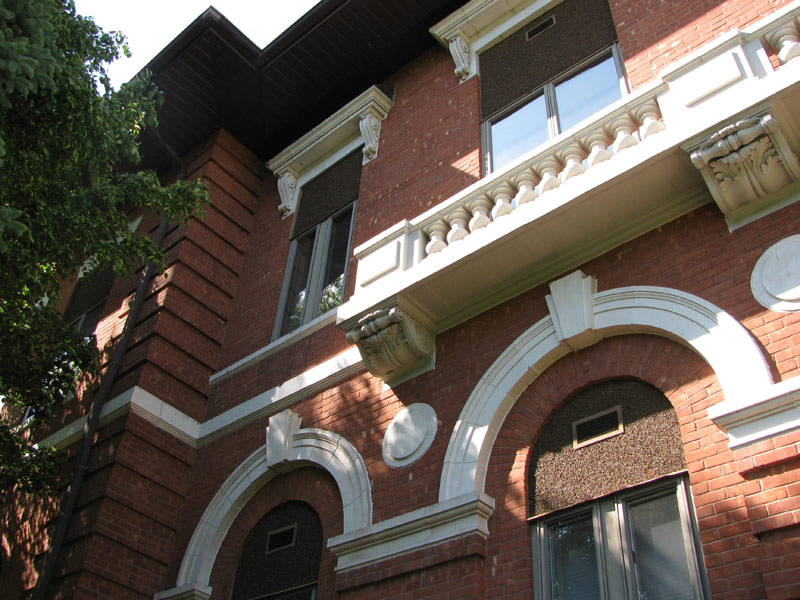
Masonry is the practice of building structures from individual units — brick, stone, or concrete — bound together with mortar. It’s one of the oldest construction methods still in everyday use, and on commercial and multifamily buildings, it’s often what’s holding the facade together decades after the original construction crew moved on.
Understanding what masonry is made of, and where it tends to fail, helps property managers and building owners tell the difference between a cosmetic repair and a structural one.
The Core Materials
Brick is made from fired clay and shaped into uniform, stackable units. Its color depends heavily on local clay composition, which is why brick from one region rarely matches brick from another exactly. Bricks are prized for consistency, fire resistance, and ease of repair compared to natural stone.
Stone — granite, limestone, and sandstone are the most common — offers a durable, natural finish and is frequently used for facades, retaining walls, and older landmark buildings. Unlike brick, stone units vary in shape and size, which makes matching repairs more of a skilled trade than a simple swap.
Mortar is the binding agent that holds everything together. It’s typically a mix of Portland cement, sand, lime, and water. Not all mortar is the same — Type S mortar is higher-strength and used for foundations, retaining walls, and structural applications, while Type N is the standard choice for above-grade brickwork, since it allows slightly more flexibility as the building settles and shifts with temperature.
Concrete and CMUs (concrete masonry units) round out the material list, used for foundations, structural walls, and precast blocks. Reinforced concrete masonry, with steel embedded for tensile strength, is standard on multi-story commercial buildings.
Why the Foundation Matters
Masonry is only as good as what it’s sitting on. Footings distribute the weight of a masonry wall evenly across the soil beneath it, and if that support shifts or settles unevenly, cracking follows — often long before it’s visible at eye level.
In cold climates, footings also need to sit below the frost line. When groundwater freezes, it expands, and shallow footings can be pushed upward over successive winters. This kind of movement is a common contributor to the cracking property managers see in older masonry buildings across northern and central New Jersey.
Common Masonry Problems on Commercial Buildings
Cracking happens from settling, thermal expansion, or insufficient support. Hairline cracks are often cosmetic, but stair-step cracking in brick or block, or cracks that widen across seasons, usually point to something structural underneath.
Efflorescence is the white, chalky residue left behind when water carries dissolved salts to the surface and evaporates. It’s not damaging on its own, but it’s a reliable sign that moisture is moving through the masonry — and the underlying water source needs attention, not just the staining.
Spalling occurs when moisture gets into brick or concrete, freezes, and forces the surface to flake or crumble away. It’s especially common on parapets and facades exposed to New Jersey’s freeze-thaw winters, and once it starts, it tends to accelerate.
Moisture intrusion ties most masonry problems together. Failed mortar joints, missing flashing, and cracked coping all give water a path into the wall system, where it does far more damage out of sight than it ever shows on the surface.
Parapets and Lintels: The Most Overlooked Masonry
Two areas of commercial masonry fail more often than the rest of the facade combined.
Parapets sit exposed on three sides — front, back, and top — which means they take on weather from every direction, year-round. A failed cap or crumbling mortar joint at the parapet lets water travel down through the wall long before it’s visible from the street. For a closer look at how these systems fail, see our guide to parapet wall repair.
Lintels are the structural supports — steel or stone — placed above windows and doors to carry the weight of the masonry above the opening. A corroding or undersized lintel can telegraph cracking straight up through the brick coursing above it, which is why lintel condition is one of the first things an experienced mason checks during a facade inspection.
When to Call a Professional
Minor mortar wear and small hairline cracks are often maintenance items. But bowing walls, cracks that keep growing, spalling brick, or water stains appearing on interior walls near the facade are signs the masonry needs a professional assessment rather than a patch job.
Adriatic Restoration has been repairing and restoring brick and stone masonry on commercial and multifamily buildings across New Jersey since 1982. If your building is showing any of the signs above, contact us for a free on-site assessment.