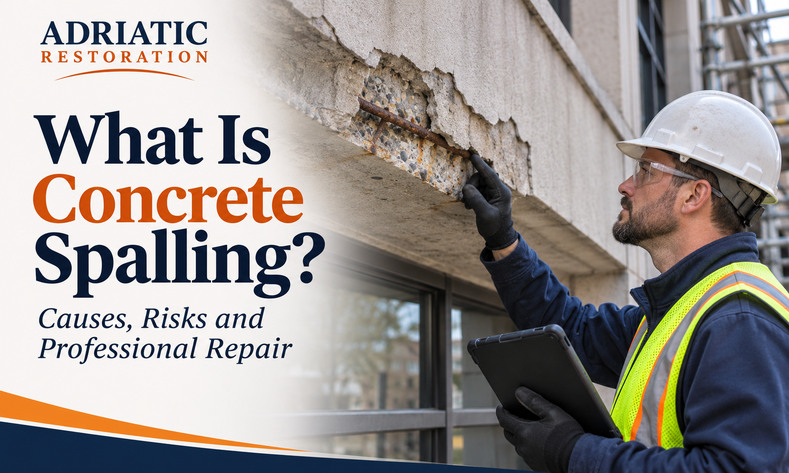
A piece of concrete on the garage floor deserves a look at the surface above. That fragment may come from a shallow defect, or from concrete that has separated around corroded steel. The debris alone cannot tell an owner how deep the damage extends.
Spalling concrete is concrete that has chipped or broken away from a surface. The repair depends on the cause and depth of deterioration. An overhead defect needs prompt professional attention because loose fragments can fall onto people below.
What Concrete Spalling Looks Like
A spall leaves a local loss of material. The surface may show a shallow pit or a deeper cavity with exposed rebar. Rust stains beside the cavity can suggest corrosion, but an inspection must establish the condition of the steel.
Concrete delamination differs from an open spall. A layer has separated below the surface but may still sit in place. A surface that looks complete can therefore conceal loose concrete, particularly along the steel reinforcement.
Scaling usually describes shallow surface loss, often as small flakes. People may use the same word for several defects. Describe the actual depth and location rather than rely on a label when you request an assessment.
Why Concrete Spalls in New Jersey
Rebar Corrosion Pushes Against the Concrete Cover
Concrete normally provides an alkaline environment which helps protect embedded steel. Chlorides can disrupt that protection. Carbonation can also reduce alkalinity over time. The depth of exposure and concrete quality affect the process.
Once corrosion develops, rust takes up more space than the original steel. Pressure can crack the concrete cover and separate a layer. The lost concrete is the visible result, rather than the whole extent of the steel problem.
The National Park Service’s historic concrete guidance describes corrosion and related concrete damage. The same need to identify the deterioration mechanism applies before an owner selects a repair for an older commercial property.
Freeze-Thaw Exposure Damages Wet Concrete
Water within vulnerable concrete can freeze and create internal stress. Repeated freeze-thaw cycles can break down the material. The moisture level and the concrete’s air-void system affect resistance, so temperature alone does not predict damage.
An exposed stair in Morristown and a sheltered wall in Newark have different exposure. Record where snow accumulates and where water persists. Those observations help explain why one area deteriorates before a nearby surface.
Deicing Salts Add Another Route to Deterioration
Vehicles carry chloride-rich slush into garages. Water can carry those salts into the slab even under a roof. A Hackensack garage entrance may receive concentrated exposure where vehicles first leave the street.
Deicing salts can contribute to surface scaling and chloride-related steel corrosion. The mechanisms differ, so a repair should distinguish a weak surface from damage around reinforcement. A new finish alone cannot establish which mechanism caused the defect.
Original Concrete Quality Can Affect Later Damage
Excess surface water at placement can leave a weak layer. Poor consolidation may leave voids, and insufficient concrete cover places steel closer to exposure. These defects may only become obvious after years of service.
Air entrainment helps suitable exterior concrete resist freeze-thaw damage. Proper moisture and temperature control after placement also support strength development. A protective product cannot retrospectively correct every defect in the original concrete.
Water Can Persist at Failed Details
A worn joint seal or blocked drain can keep concrete wet. A failed membrane may admit water through the slab. Concrete damage near these details calls for a review of the water route as well as the lost material.
At a Jersey City balcony, inspect the top surface and the edge as part of the same assessment. Water may enter above and appear below. A repair to the underside alone may leave the exposure unchanged.
When Spalling Concrete Needs Urgent Attention
An owner should not decide structural safety from the cavity size. A small defect above an entrance presents a different immediate hazard from shallow loss in a closed room. Keep people away from suspect overhead material and arrange an assessment.
Conditions which deserve prompt professional review include these:
- Loose overhead material: Fragments have fallen or appear detached above an occupied route.
- Exposed steel: Rust accompanies lost concrete, or the bar appears reduced in size.
- Changed geometry: A slab shows new deflection or a crack has visible displacement.
- Repeat failure: An old patch has broken away, or fresh damage appears beside the repair.
An engineer may need to assess load capacity and temporary support. A contractor’s surface repair proposal does not establish that a member can remain in service. The assessment should identify restrictions needed before invasive work starts.
How Professionals Assess the Extent of Damage
A visual survey records defects on a marked plan. Photos should show the location and scale of damage. A series of dated images may reveal change, but cannot replace inspection of concealed conditions.
A sounding survey can help locate hollow or detached areas. Professionals may use a suitable tap method or chain drag on appropriate surfaces. Owners should avoid a tap test on overhead concrete themselves, since the test can dislodge fragments.
Concrete condition assessment may also involve tests selected for a specific question. Chloride analysis can assess salt contamination. Carbonation checks or steel exposure may help explain corrosion, as appropriate to the property and observed pattern.
Compare the upper and lower surfaces where access allows. Concrete balcony repair often needs information from the foot-traffic surface and soffit. A top-only survey can miss an underside hazard.
Professional Concrete Spall Repair Methods
Local Repair to a Defined Defect
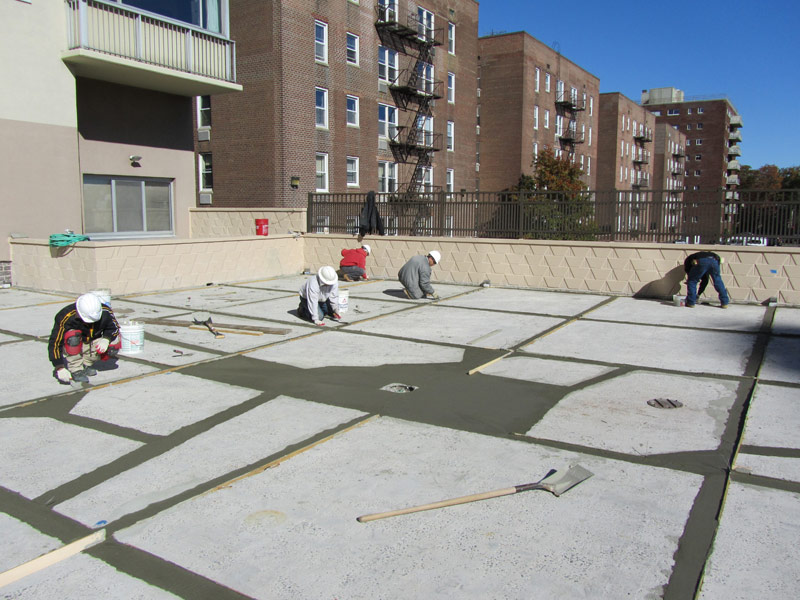
A localized concrete spall repair starts with removal to sound material within an appropriate repair boundary. The team checks exposed steel and prepares the substrate. A compatible repair mortar then restores the section to the specified shape.
The material must suit the location and depth. A mortar for a horizontal floor may differ from one for an overhead repair. Product strength alone does not establish compatibility with the retained concrete.
Partial-Depth or Full-Depth Replacement
Partial-depth repair addresses a defined depth within a slab or other member. Full-depth replacement extends through the section. The choice depends on the condition and repair design, rather than the size of the visible hole alone.
Removal can affect support and load transfer. An engineer may specify temporary shoring or a removal sequence. The repair team must check for embedded services before a cut extends into the structure.
Repair of Deteriorated Reinforcement
Rust removal exposes the steel for assessment, but cannot replace metal already lost. The repair design may require supplemental reinforcement or another structural response. Bar connections and development length need an appropriate design rather than a visual guess.
Corrosion treatment may include a compatible protective product. Some projects also warrant galvanic anodes or a designed cathodic protection system. These are design choices, rather than routine additions for every small patch.
Water Protection After Concrete Repair
The repaired section still faces the original exposure unless the water route changes. Concrete waterproofing may need new joint details or a protective surface system. Drain work may form a separate but connected part of the scope.
A sealer can reduce water uptake in suitable sound concrete. A membrane addresses different exposure and leak-control needs. Neither option makes damaged steel sound or replaces a required structural repair.
Why a New Patch Can Fail Beside the Old One
A tidy patch may sit next to chloride-contaminated concrete. Corrosion can continue in adjacent steel even after the original cavity looks repaired. The proposed boundary therefore needs a reason beyond the edge of the visible spall.
Patch-edge corrosion is one possible explanation for nearby deterioration, but not the only one. Poor bond and continued water entry can also cause failure. Ask what evidence supports the diagnosis before the next repair repeats the first approach.
Keep records of previous repair limits on the condition plan. This makes repeat defects easier to compare across inspection dates. Parking garage restoration can then address a wider pattern rather than a series of unrelated cavities.
Repair Preparation Matters as Much as the Product
The edge geometry and surface profile must suit the repair material. A thin feather edge may conflict with the product’s minimum depth. Dust or weak concrete can also prevent the intended bond.
Moisture requirements differ between cement-based mortars and resin systems. The crew must follow the selected material’s instructions. A damp substrate requirement for one product should not become a rule for another.
The repair material range shows why mortars and structural products have distinct uses. Selection must account for shrinkage and thermal compatibility, rather than the highest strength number on a brochure.
Can You Prevent Further Spalling?
An owner can reduce avoidable exposure without a promise that deterioration will stop. Arrange deck drainage repairs where water persists. Keep appropriate maintenance records for joint seals and protective finishes.
New repair concrete needs suitable protection throughout its early cure. Cold weather may require enclosure and heat, subject to the material instructions. A surface that feels hard can still need more time before traffic or a new coat.
Schedule condition reviews at intervals suited to the structure and exposure. Review the property after an impact or a new leak as well. A fixed calendar alone may miss a defect which develops between planned visits.
What to Record Before a Concrete Repair Visit
Use photos from a safe location, without entry beneath suspect material. Label the floor level and nearest column line. Include a wider image so the assessor can relate the defect to the structure.
Useful records extend beyond the current cavity. Prior structural repair drawings may show earlier work at the same member. Note any change in use which affects loads or access.
Ask the proposal to separate immediate hazard controls from permanent work. A temporary closure may address access risk, but does not repair the concrete. The next step should have a named responsibility and a clear scope.
Arrange a Concrete Assessment in Northern or Central NJ
Adriatic Restoration repairs deteriorated concrete on commercial and multifamily properties in New Jersey. The company’s services include concrete repair and protective waterproofing, with work in communities such as Fort Lee and Hoboken.
When you request a concrete assessment, share the defect location and any earlier repair records. Ask which conditions require review by an engineer and how the proposal addresses water exposure. A useful scope explains the cause as well as the repair area.
Spalling Concrete FAQs
Is concrete spalling always structural?
Some defects affect only a shallow surface layer. Others involve reinforcement or a structural member. An assessment must establish the depth and cause before an owner treats the damage as cosmetic.
Can paint cover a spalled area?
Paint does not rebuild lost concrete or repair corroded steel. A loose substrate may detach beneath the finish. Assess the defect before any cosmetic treatment.
Should exposed rebar receive a new coat immediately?
Exposed steel needs assessment for corrosion and section loss. A protective coat cannot replace lost metal. The repair design should define steel treatment and the adjacent concrete work together.
Can spalling concrete be repaired in cold weather?
Some projects proceed with suitable temperature control and protection. The repair material must stay within its stated limits. Ask about the cure plan and the conditions needed before use resumes.
Does a small spall mean a small repair?
The visible cavity may sit inside a larger detached area. Investigation may also find corrosion beyond the open defect. The final repair boundary should follow the condition assessment rather than the surface mark alone.