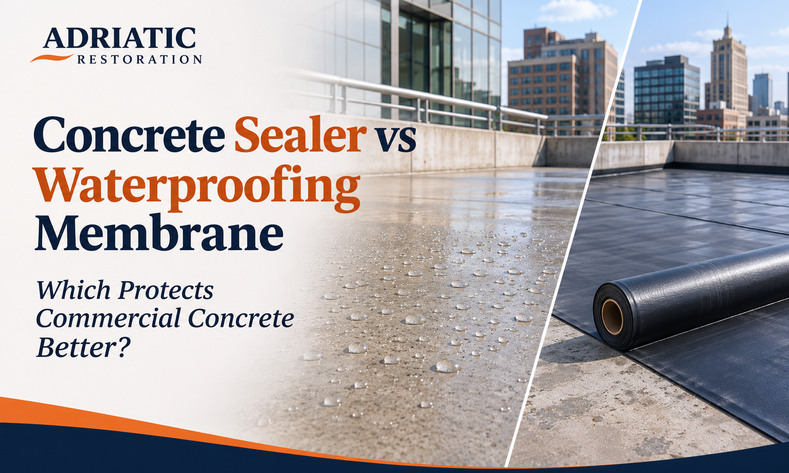
A concrete sealer can reduce water absorption in sound concrete. A waterproofing membrane forms a barrier across the surface, with details at joints and edges. The better choice depends on the water exposure and what the structure must protect.
If rain passes through a suspended slab into occupied space, a surface sealer may leave the main leak routes untreated. If sound exterior concrete needs less water uptake, a suitable sealer may meet the brief. Start with the problem, rather than a product name.
What Does a Concrete Sealer Do?
A penetrating concrete sealer enters the surface pores. Some products repel liquid water without a visible film. Silane and siloxane treatments belong to this group, though their depth of penetration and approved uses differ by formulation.
A surface-film sealer leaves a layer at the surface. Acrylic and some resin products fall into this broad category. Appearance may change, so request a test area if color or gloss matters to the property.
Neither label proves the ability to bridge cracks. A product may reduce water uptake through the concrete yet leave a crack open. Product data should state the intended exposure and the limits of the treatment.
The manufacturer’s sealer categories separate water repellents from other surface treatments. Compare the actual technical data, rather than assume all products sold as sealers serve the same purpose.
How a Waterproofing Membrane Differs
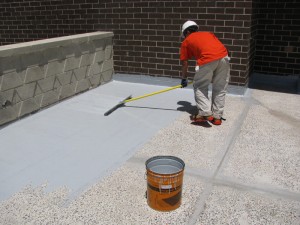
A waterproofing membrane forms a continuous barrier over a prepared substrate. Sheet systems use factory-made material with sealed laps. Fluid-applied systems form the layer on site, with thickness set by the specified system.
Continuity matters beyond the flat field. The membrane must connect to a drain or turn up at a wall. An untreated termination can admit water even when the central surface looks intact.
Some membranes can accommodate defined crack movement. Others need a separate joint detail. Ask about the tested movement range and which joints require their own system instead of a coat across the gap.
A membrane also needs protection suited to use. A below-grade sheet may require a protection course before backfill. A traffic-rated membrane needs a wear surface intended for the expected foot or vehicle traffic.
Match the Protection to the Concrete Location
Sound Exterior Concrete Above Grade
An exposed wall with no active cracks may suit a water-repellent treatment if the aim is to reduce absorption. Confirm vapor permeability and compatibility with earlier products. A dense surface or an old film can affect uptake.
A Jersey City facade may have water entry at window perimeters rather than through sound concrete. Surface treatment does not replace joint repair. Trace the entry route before a broad application hides the clues.
Balconies and Suspended Decks
A suspended slab separates two spaces. Water through the top may affect the underside or the room below. A balcony waterproofing system must account for the edge and the wall connection, as well as the foot-traffic surface.
Threshold height can limit the assembly. Check the proposed finished level against door clearance and drainage. An added layer should not create a low doorway or obstruct a drain inlet.
Commercial Garages and Ramps
Vehicle tires introduce abrasion and shear forces. Salt carried into a Hackensack garage adds chloride exposure. Concrete deck waterproofing needs a system approved for traffic, with extra attention at turns and ramp transitions.
A penetrating treatment may reduce absorption in appropriate concrete, but cannot substitute for a specified leak-control assembly. Parking garage restoration may also need repairs beneath the surface before protective work starts.
Foundations and Below-Grade Walls
Soil can hold water against a foundation. Hydrostatic pressure creates a different demand from rain on an exposed wall. A sealer intended for above-grade splash exposure should not become a below-grade barrier by assumption.
Exterior foundation waterproofing must suit the wall and site access. Drainage may form part of the design, but a drain does not excuse gaps in the membrane.
Water Resistance Is Different from Leak Control
Water absorption measures uptake into a material. A leak through a joint follows another route. Ask the assessor to distinguish water through the concrete from water around a connection before you compare systems.
A damp underside does not prove the entry point sits directly above. Water can travel along a crack or interface. A condition map should relate wet areas to joints and drains on the upper surface.
The phrase waterproof concrete can obscure this distinction. A surface treatment cannot repair a broken drain connection or a failed wall transition. Concrete waterproofing works as an assembly, rather than an isolated product choice.
Cracks and Corroded Steel Need Attention First
Rust stains beside a crack deserve assessment before a new finish. Rebar corrosion can separate the concrete cover from the steel. A film over that area does not restore the bond or replace lost metal.
Loose material also provides a poor substrate. A membrane may adhere to a surface layer which later detaches. The concrete repair scope should identify unsound areas and any repair needed before the protection layer.
Crack treatment depends on cause and movement. A dormant crack may need a different detail from a joint that opens with seasonal temperature change. A membrane manufacturer may require reinforcement or a separate flexible seal at these locations.
Ask who will assess a crack with displacement or nearby deflection. Product selection does not replace a structural assessment. The structure must suit the proposed repair before an owner weighs the protective finish.
Drainage and Membrane Details Belong in One Plan
Water on a deck needs a route to the outlet. A coat cannot create a slope which the slab lacks. Repeated puddles call for a review of surface levels and the drain connection.
In a Hoboken condominium garage, a low corner may stay wet after the central aisle dries. Record that difference after rain from a safe location. The wet-area map helps the team separate a local slope problem from a wider membrane defect.
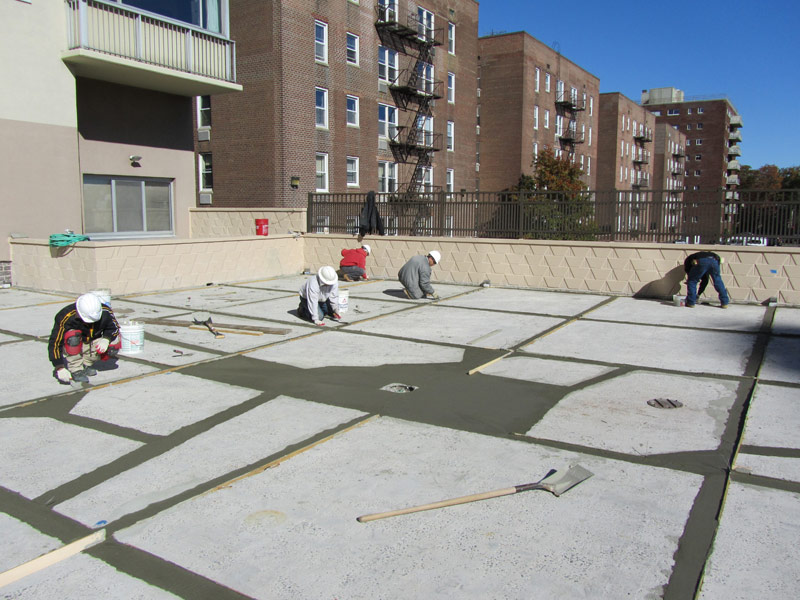
The scope for deck drainage should connect with the waterproof layer at each outlet. A new membrane beside an old failed drain flange can leave the water route open.
Sheet systems have their own junction rules. The MEL-ROL technical instructions address substrate preparation and laps for that particular assembly. Those details illustrate why a generic roll of material is not a complete specification.
What the Surface Must Be Like Before Application
Concrete surface preparation removes material which blocks adhesion or absorption. Oil and old finishes may require different treatment. The desired surface profile depends on the selected system, rather than a single roughness rule for every product.
Moisture limits also vary. Some systems tolerate a damp substrate; others need specific moisture conditions. Ask which test applies and what result permits the next stage, rather than rely on touch alone.
Repair materials need time to reach the condition required for the protective layer. The repair mortar and the membrane must be compatible. An early coat can conflict with the repair material’s moisture requirements or the membrane’s bond limits.
Temperature at the concrete surface matters, as does the weather forecast. A warm afternoon after a cold night may still leave an unsuitable substrate. The contractor should use the product’s stated application limits and plan protection from rain.
Compare Scope Before You Compare the Total
A sealer proposal may cover only an open surface. A membrane proposal may include crack details and drain work. Their totals do not describe equivalent work unless the repair areas and exclusions match.
Ask each bidder to identify the substrate repairs separately. Access may require lifts or temporary closures, even on a small area. The size of a visible stain alone cannot define the full scope.
Useful questions include these paired checks:
- Treatment and purpose: Does the proposal aim to reduce absorption or stop water through an assembly?
- Joints and drains: Which connections receive separate details, and who repairs them?
- Protection and access: What must stay closed, and what permits use again?
- Repair and finish: Which concrete defects receive repair before the protective layer?
This comparison also makes omissions easier to discuss. A proposal which names a product without a treatment area leaves room for disagreement. Ask for the same marked plan with each price proposal, without an assumed service-life promise.
A Practical Test Area Can Answer More Than a Sample Card
Choose a test area which resembles the actual substrate. A clean interior corner may give a different result from a weathered ramp. The trial should reflect the exposure and preparation proposed for the full project.
Agree on what the trial will check. Appearance and adhesion require different observations. Any water test must suit the structure and the system; an owner should not improvise a flood test above occupied space.
Keep the trial result with the product records. A successful sample does not remove the need for proper details elsewhere. The drain edge and the main field may still need different work.
Maintenance Depends on the System You Select
Check the completed surface after seasonal exposure and after work by other trades. A new anchor through a membrane can create a water route. Repair the penetration detail through a method compatible with the installed assembly.
Keep drains accessible and arrange appropriate debris removal. Salt exposure may continue indoors where vehicles carry slush into sheltered areas. A roof over the garage does not mean the deck avoids moisture or chlorides.
Ask for product-specific inspection guidance. Surface wear and a loose joint seal may need separate responses. Avoid a fixed recoat date without reference to condition and the manufacturer’s requirements.
Plan Concrete Protection for a New Jersey Property
Adriatic Restoration provides concrete repair and waterproofing services for commercial and multifamily properties across northern and central New Jersey. A review can connect the visible water problem with substrate repairs and the proposed protection system.
Share the leak history and any prior repair records when you request an assessment. Ask which work addresses the water source and which work restores damaged concrete. That distinction helps a board approve a scope based on the property’s condition.
Concrete Sealer and Membrane FAQs
Can a concrete sealer stop a leak through a crack?
A water-repellent sealer does not normally bridge an open crack. The crack needs assessment and a suitable repair detail. A leak may also involve a joint which needs separate treatment.
Does every commercial slab need a waterproofing membrane?
The need depends on exposure and the space below. Sound concrete with a limited absorption concern may suit a sealer. A suspended deck with leak-control needs requires a different assessment.
Can a new membrane go over an old sealer?
Compatibility depends on both products and the substrate. An old treatment may obstruct adhesion or require removal. A trial area and the manufacturer’s instructions help define the preparation.
Will a membrane repair structural concrete damage?
A membrane controls water exposure within its intended use. The material does not replace damaged steel or rebuild a weakened section. Structural defects need an appropriate repair before surface protection.
How long will either system last on an NJ property?
Service life depends on the selected product and site conditions. Traffic wear and joint maintenance also affect performance. Ask for the product requirements and any written warranty terms without an assumed lifetime result.