The facade of a wall does not deteriorate or fall within a day. It can be weeks or months of damage ruining the interior until it finally becomes visible. The mortar washes out gradually. A rusting lintel lifts the brick above it by a fraction of an inch each year. You may find a piece of masonry on the sidewalk any time.
Property managers do not need to be engineers to catch these changes early. They only need a consistent way to look at a building. This commercial facade inspection checklist gives you that structure.
What a Commercial Facade Inspection Covers
A commercial facade inspection is a planned review of a building’s exterior walls and everything attached to them. It covers the cladding material and the joints between panels or units. Windows, parapets, and balconies fall within its scope as well.
An inspection looks for two kinds of problems. The first is water getting into the wall. The second is material that could come loose and fall.
ASTM E2270, the standard practice for periodic facade inspections, focuses on that second risk. It defines unsafe conditions as hazards that come from loss of facade material. That framing helps managers rank what they find, since a falling hazard outranks a cosmetic stain every time.
How Often Should a Building Facade Be Inspected?
There is no defined answer here because it depends on the building age and height. The cladding materials and any local rules can also change the timeline. Many owners use three layers of review instead of one.
- Routine visual checks: Building staff walk the perimeter on a regular cycle and look for obvious changes.
- Event checks: Staff take a fresh look after major storms and any nearby construction.
- Professional reviews: A qualified engineer or restoration professional performs close-up inspections on a longer cycle.
Local requirements are different across municipalities. Your local construction official can confirm whether any periodic inspection rules apply to your property.
Start at Ground Level
The sidewalk is among the best indicators, so always start your search from here. Walk around it and check for:
- Small chips of brick or concrete near the base of the wall
- Bits of mortar collecting in planters and window wells
- Rust-colored streaks on the pavement below balconies
- Water staining on walls near downspouts and grade
Fragments on the ground are one of the earliest signs of loose facade materials above. Keep clear of potential falling material. Record the location, then inspect the wall above from a safe viewing position.
A pair of binoculars can be helpful if you are inspecting taller buildings. You can see cracks and open joints on upper floors without any special access.
Commercial Facade Inspection Checklist by Material
Brick Facade Inspection
Brick is durable, but the mortar between the bricks wears out sooner. Try to find these signs on a brick wall:
- Crumbling or missing mortar joints
- Spalling, where the face of the brick has popped off
- White efflorescence (shows water moving through the wall)
- Bulging or bowing sections that push out from the wall plane
A cracked brick facade needs a closer read of the crack pattern. Stair-step cracks that follow the mortar joints often point to movement or corrosion behind the wall. A crack that runs straight through the bricks themselves usually signals higher stress. The building may need brick facade restoration.
Concrete and Precast Panels
Concrete hides its steel reinforcement, so the warning signs come through the surface. Look for:
- Rust staining that bleeds out of cracks
- Spalled areas with exposed rebar
- Hollow-sounding patches that suggest delamination
- Failed sealant in the joints between precast panels
Rust stains are more critical than they look. When steel corrodes inside concrete, it expands and breaks the concrete apart from within.
Stucco and EIFS
Stucco and EIFS look similar from the street, but they behave differently. Stucco is a hard cement-based finish. EIFS is a layered system with foam insulation behind a thin coat.
An EIFS facade inspection should include:
- Cracks around window corners and other openings
- Soft spots or dents from impact damage
- Missing sealant where the system meets windows and doors
- Staining or swelling near the bottom edge of the wall
Moisture trapped behind either system can damage the wall without much sign on the surface. EIFS stucco repair usually starts with finding where water entered.
Stone and Decorative Elements
Older buildings often carry stone trim and cornices. These pieces can be heavy, and they depend on metal anchors that may have corroded over decades. Look for open joints and displaced pieces. Any element that appears out of line deserves professional attention.
Window Openings and Sealant Joints
Openings are where many facade problems start. The wall around a window has to manage water and movement at the same time.
Sealant joint failure is one of the most common findings on any commercial facade. Check perimeter sealant for cracks and gaps. Also look for sealant that has pulled away from one side of the joint. Expansion joints on long walls deserve the same review.
Steel lintels above windows need special attention. As a lintel rusts, it expands and pushes up the brick above it. Look for horizontal cracks just above window heads and rust stains at the lintel ends.
Balconies and Other Projections
Anything that sticks out from the wall has to bear the harsh outdoor weather. Balconies, cornices, and light fixtures on the facade are included in this list.
A balcony railing inspection should check posts for rust at the base and loose connections at the wall. Slab edges need a check for cracks and spalling. Check if the drainage system works properly. Wobbly railings are a life-safety issue and need immediate repair.
Warning Signs of Facade Deterioration
Some findings can wait for a planned repair cycle, but others cannot. Here are some red flags that demand immediate attention:
- Pieces of masonry or concrete on the ground
- Bulging sections of wall
- Wide cracks that have grown since the last inspection
- Loose balcony railings
- Displaced stone or cornice pieces
Keep people away from the area below if you notice these signs. Then call a qualified professional before anyone works near it.
Keep Notes of What You Find
Good records turn each inspection into a useful history. Take dated photos of every defect, along with a wider shot that shows its location. Mark each problem on a simple elevation drawing of each wall.
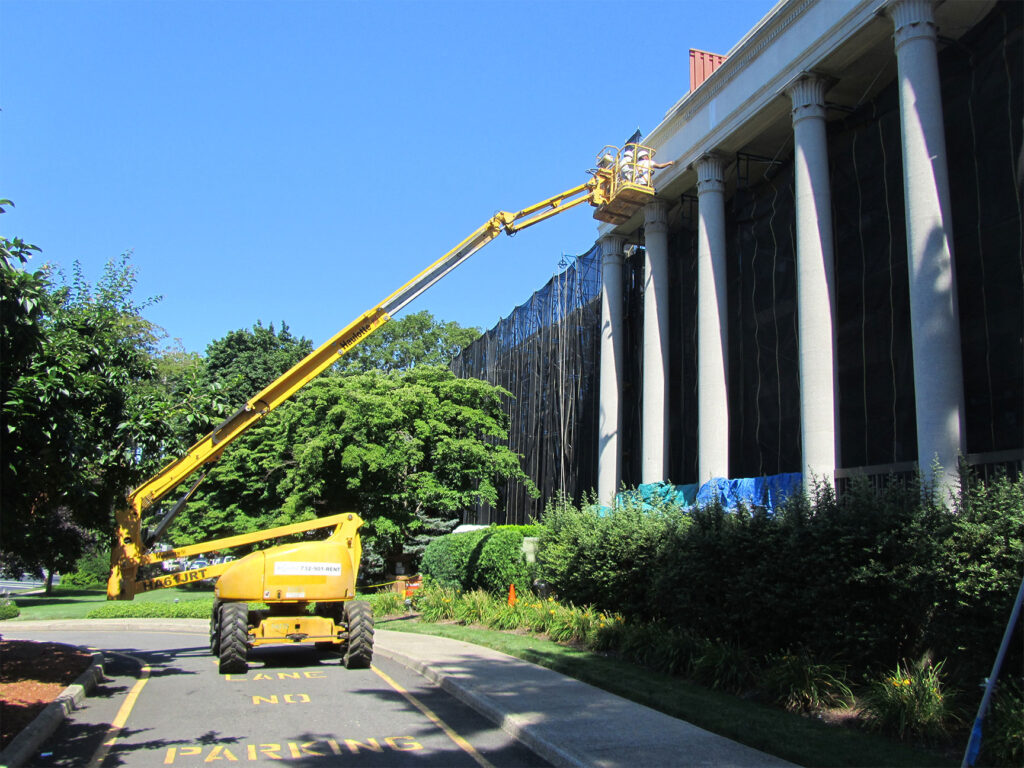
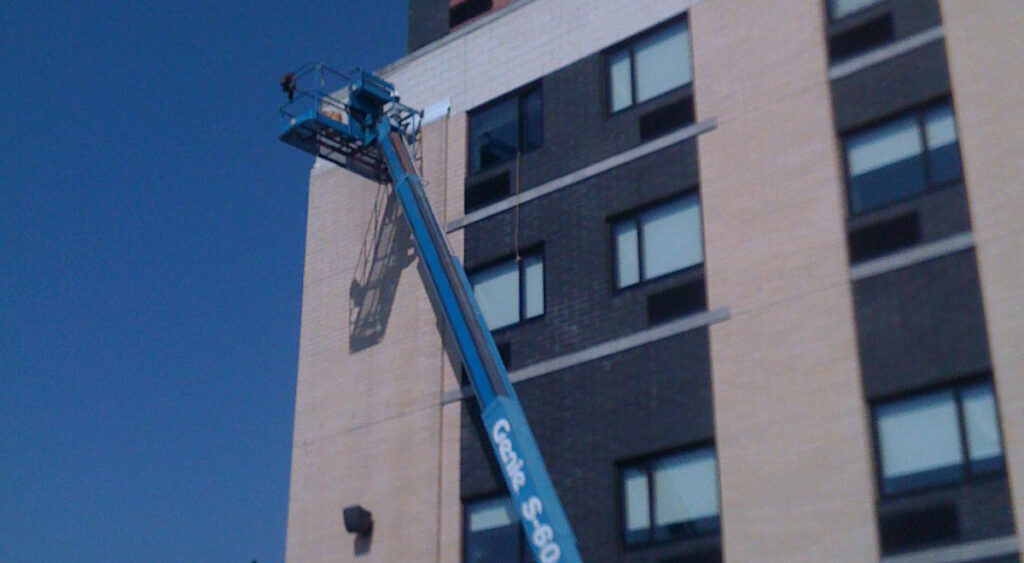
A clear facade inspection report also notes what you could not see. Upper floors and hidden areas often need close-up access, such as a lift or rope access. Always highlight these gaps, so the inspector knows where to pay attention. Compare each report with the last one to find out if any problem has grown.
Local Factors for Facade Inspection in New Jersey
Weather can define every inspection in the state. Freeze-thaw cycles hit masonry hard. Water soaks into brick and mortar. When it freezes, it expands and breaks the material apart over time.
Older masonry buildings in Hudson and Essex counties often show this damage first, particularly on walls that face prevailing weather. Owners looking for facade repair often find years of mortar loss on the north and west elevations.
Coastal properties in Monmouth and Ocean counties face salt air and wind-driven rain. Salt speeds up corrosion in steel lintels and balcony railings. Inspections at the shore should give metal components extra attention.
Plan for Facade Maintenance
A written plan can convert your occasional inspections into a steady routine. You should follow a written schedule for staff walk-throughs and professional reviews.
For each building, keep a file with:
- Facade materials and the year of construction
- Past repair records and contractor reports
- Dated photos from each inspection
- A list of open items and target repair dates
Small repairs cost less because the problem is small. Repointing a few failed mortar joints is a far smaller project than rebuilding a section of wall. Keep a copy of your commercial facade inspection checklist in the file so each inspector follows the same route.
Getting a Professional Facade Assessment
A staff walk-through catches a lot, but it has limits. They may not notice the corrosion and trapped moisture, as it is not visible from the sidewalk.
Do you notice bulging walls or repeated leaks? A close-up professional review is the logical next step. Adriatic Restoration Corporation provides facade restoration for commercial and multifamily buildings in New Jersey.
Contact our team to discuss a field assessment.
Frequently Asked Questions
What should a commercial facade inspection checklist include?
A commercial facade inspection checklist should cover the cladding material and the joints between units or panels. It should also include windows and lintels. Balconies and parapets belong on the list as well, along with any attached elements such as signs.
Who can perform a facade inspection?
Building staff can handle routine visual checks from the ground and from accessible areas. Close-up inspections and formal reports call for a qualified professional, such as a licensed engineer or architect with facade experience. Local rules may set specific qualifications for required inspections.
What does efflorescence on a facade mean?
Efflorescence is a white, powdery deposit on masonry or concrete. It forms when water dissolves salts inside the wall and carries them to the surface. Its presence shows that water moves through the wall regularly, which can lead to freeze-thaw damage.
Are small facade cracks a concern?
Hairline cracks in stucco or mortar are common and may stay stable for years. Cracks that grow or carry rust stains deserve closer attention. Measuring and photographing cracks at each inspection shows whether they are changing.
When should a property manager restrict access below a facade?
Restrict access whenever you find fallen material or a visibly loose element above a walkway or entrance. Barriers or a covered walkway keep pedestrians out of the fall zone. Keep the area closed until a qualified professional confirms the condition is safe.