A leak on the fifth floor rarely starts on the fifth floor. Water may enter at a parapet and run along a hidden steel lintel. It then shows up indoors, sometimes two rooms away from the real source.
We wrote this guide for property managers and condominium boards. It also serves building owners who want to understand how the outside of a building actually works.
What Does a Building Envelope Include?
A building envelope is the physical barrier that separates a building’s conditioned interior from the outdoor environment. It includes the roof and the exterior walls. Windows and doors belong to it as well.
The Whole Building Design Guide from the National Institute of Building Sciences takes a broad view. It counts below-grade basement walls and the floor slab as part of the envelope, since they also separate inside from outside.
Many engineers prefer the term “building enclosure.” In the building enclosure vs building envelope debate, both terms describe the same system for most practical purposes.
The envelope matters for energy as much as for leaks. The U.S. Department of Energy estimates that the opaque envelope affects 28% of building energy use. The opaque portion covers every element except the windows.
4 Control Layers of a Building Envelope
Building scientists describe the envelope as a stack of control layers. Each layer manages one force. Water control comes first, because water causes the most damage.
- Water control layer: The drainage plane, or water-resistive barrier, stops rain that gets past the cladding.
- Air control layer: The air barrier limits air leakage through walls and roofs.
- Vapor control layer: The vapor retarder slows moisture that moves through materials by diffusion.
- Thermal control layer: Insulation slows heat flow in both winter and summer.
A wall can look solid and still fail when one of these layers has a gap. Brick and stone are claddings, not water barriers. Stucco works the same way. Building Science Corporation identifies rain control as the single most important factor in durable construction.
Components of a Building Envelope
Roof Membranes and Parapet Walls
The roof membrane sheds more water than any other part of the building. Parapets rise above the roof line and take weather from both sides. A parapet coping caps the wall, and counterflashing ties the roof membrane into the masonry.
When a coping joint opens, water drops straight into the wall core. Owners who need parapet wall leak repair in NJ often find the problem started at the cap, not at the roof. Our parapet wall repair page explains this system in more detail.
Exterior Walls and Facade Systems
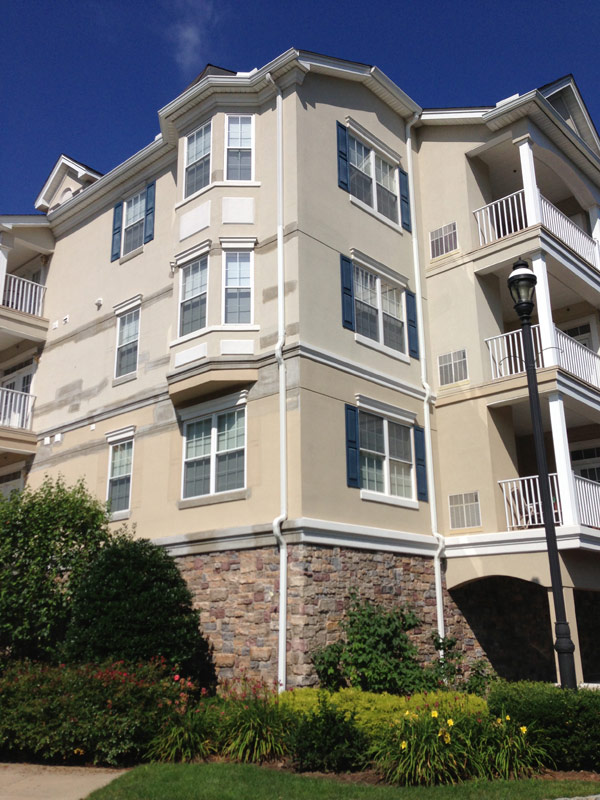
Many New Jersey buildings use brick veneer or precast concrete. Stucco and EIFS appear on many mid-rise and multifamily properties. Each system handles water differently, so each needs a matching repair approach.
Brick veneer relies on a cavity behind the brick. Through-wall flashing at each floor line collects water in that cavity. Weep holes then let it escape to the outside. Facade restoration addresses the cladding and the hidden water path together.
Window and Door Openings (Fenestration)
Sealant joints close the gap between the frame and the wall. A sill pan under the frame catches water that gets past the seal.
Sealant joints wear out faster than the materials around them. Exterior window caulking restores this line of defense before water reaches the interior.
Balcony and Elevated Deck Waterproofing
A balcony slab often extends straight through the exterior wall. That creates a direct path for water and cold. A waterproof membrane and proper drains protect the slab from the top.
A condo balcony leaking into the unit below usually points to a failed membrane or a clogged drain. It can also mean a bad joint where the slab meets the wall. Balcony waterproofing targets those specific details.
Below-Grade Walls and Foundation Waterproofing
Soil holds water against foundation walls. That water pushes inward with hydrostatic pressure, which grows as the water table rises. Cold joints, where the wall meets the footing, give water an easy route inside. Learn more about our below-grade waterproofing services.
Common Building Envelope Failure Points
Most leaks do not start in the middle of a wall. They start where one material or system meets another. Investigators call these locations transitions or interfaces.
Common failure points include:
- Window perimeters, where sealant meets brick or precast concrete
- Shelf angles and lintels, where through-wall flashing should turn water outward
- Parapet copings and the joint between the roof and the wall
- Balcony slab edges, where the deck meets the facade
- Expansion joints and control joints in long walls
- Below-grade cold joints and pipe penetrations
Steel lintels deserve special attention. When a lintel rusts, the steel expands as it corrodes. Engineers call this rust jacking. The growth cracks the brick above and opens new paths for water. Lintel repair and replacement usually includes new flashing at the same time.
Owners often ask, “Why does my brick wall leak when the mortar looks fine?” Brick absorbs water like a sponge. If weep holes clog with mortar droppings, or the flashing has failed, that water has nowhere to go but inside. Through-wall flashing repair often solves leaks that surface sealers never could.
Signs of Building Envelope Failure
Catching these signs early keeps a small repair from turning into a large one.
- Water stains or bubbling paint below windows
- White, chalky efflorescence on brick or concrete
- Spalling, where the faces of brick or concrete pop off
- Cracked or missing sealant at windows and joints
- Rust stains under balconies or at lintels
- Musty odors or mold in rooms along exterior walls
- Drafts and uneven temperatures near the outside walls
How Water Management Protects Exterior Walls
People searching for how to stop water intrusion in commercial buildings often expect one product to fix the problem. In practice, the answer is a sequence of strategies.
Building scientists often describe four strategies in order of priority:
- Deflection: Roof overhangs and flashings keep most rain off the wall.
- Drainage: A drainage plane and weep holes carry water out of the wall cavity.
- Drying: Air movement and vapor-open materials let wet assemblies dry out.
- Durability: Materials that tolerate moisture survive the water that remains.
Water moves by more than gravity. Capillary action pulls water upward through porous brick and concrete. Wind pushes rain sideways and even upward into joints. Air pressure differences can draw water through small gaps in the air barrier.
Sealing only the outside face can trap water inside the wall, so a good repair accounts for each of these forces.
How New Jersey Freeze-Thaw Cycles Damage Exterior Walls
New Jersey winters put heavy stress on exterior walls. Temperatures cross the freezing point many times each season. Water expands by about nine percent when it freezes, and that expansion breaks brick and concrete from the inside.
This freeze-thaw cycling explains much of the spalling seen on older buildings in Essex and Passaic counties. It also drives mortar loss, which makes brick repointing a regular maintenance task in the region.
Coastal properties in Monmouth and Ocean counties face heavy wind-driven rain. That rain can reach joints that ordinary rainfall never touches. Deicing salts add another threat, since they speed up rebar corrosion in plaza decks and garages.
Urban and suburban properties face their own pressures. A board seeking facade leak repair often manages an older brick building with original flashing. A manager looking for commercial building waterproofing near Hudson County may oversee a high-rise with exposed balconies and plazas.
Building Envelope Inspection in New Jersey
A sound diagnosis comes before any repair. Without one, crews often seal the visible symptom while the real entry point stays open.
A thorough assessment usually follows these steps:
- Review the leak history and any past repair records.
- Walk the exterior and roof to find visible distress.
- Open small test areas to look at flashing and the cavity behind the cladding.
- Run controlled water tests to confirm the entry point.
- Recommend repairs that address the cause, not just the stain.
Field water testing often follows ASTM E1105, a standard test method for water penetration at windows and curtain walls. Moisture meters and infrared imaging can also help locate wet areas behind finishes.
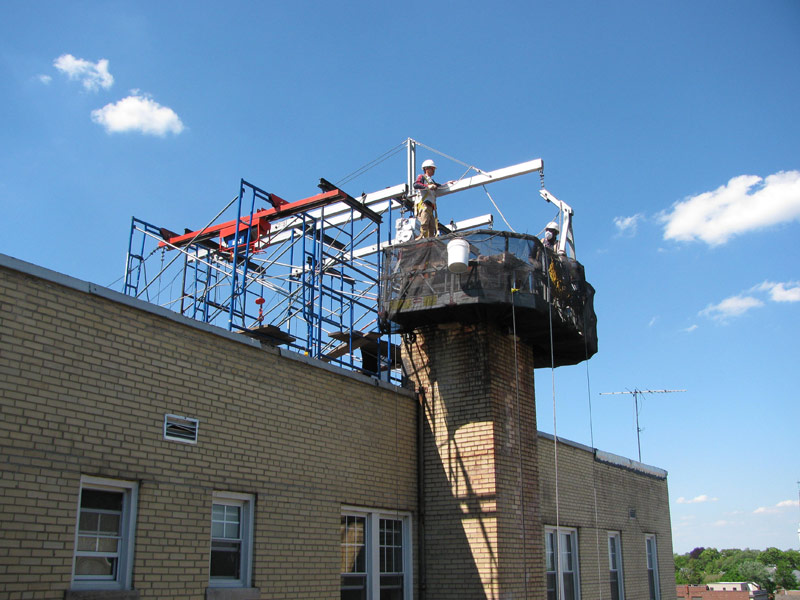
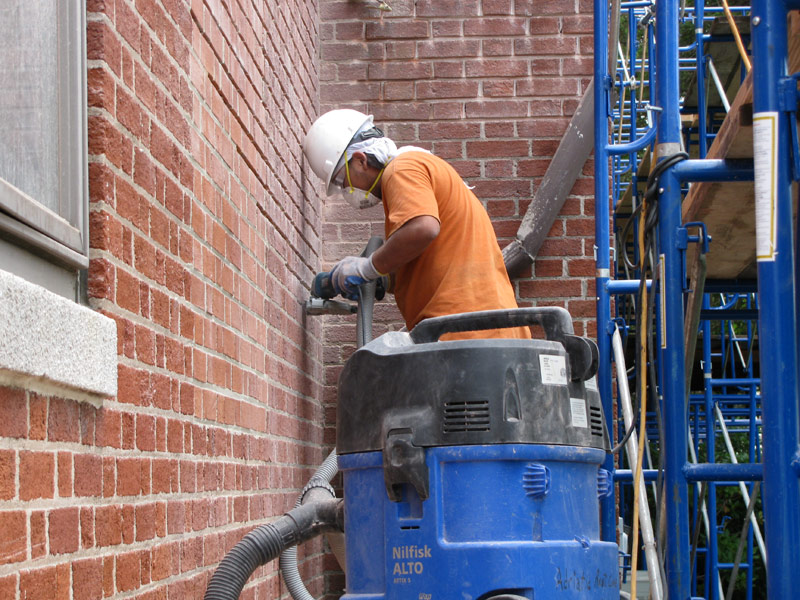
The Adriatic Restoration team begins its projects with a hands-on field assessment. We recommend a repair or restoration approach based on what the assessment finds.
Building Envelope Maintenance
Condominium boards benefit from a planned maintenance cycle. A yearly visual review of the roof and sealant joints catches problems early. Boards should check balcony drains at the same time. Clean drains and clear weep holes cost little to maintain but prevent serious water damage.
Exterior Restoration and Waterproofing in New Jersey
Adriatic Restoration Corporation has provided exterior building restoration and waterproofing in New Jersey since 1982. We focus on commercial and multifamily properties, including condominium buildings.
You need a proper field assessment if your building shows any of the signs in this guide. You can contact Adriatic Restoration to discuss a project inquiry for your property.
Frequently Asked Questions
What are the main components of a building envelope?
The envelope includes the roof and the exterior walls. It also includes windows and doors. Many building scientists include below-grade foundation walls and the floor slab as well, since those elements separate the interior from the soil outside.
What causes most commercial building leaks?
Most envelope leaks start at transitions, where one material meets another. Window perimeters and lintels rank among the most frequent entry points. Parapet copings follow close behind. Failed flashing and aged sealant joints sit behind many of these leaks.
Can a brick facade leak without visible cracks?
Yes. Brick and mortar absorb water even when they look intact. A brick wall depends on hidden flashing and open weep holes to drain that water. When those parts fail, leaks appear indoors without any obvious crack outside.
Does envelope repair affect energy use?
Yes. The U.S. Department of Energy estimates that the opaque envelope affects about 28% of building energy use. Repairing gaps in the air barrier and removing wet insulation can improve comfort and reduce heating and cooling loads.
How often should a commercial building exterior be checked?
Many owners schedule a visual review once a year and again after severe storms. Older masonry buildings and properties near the coast may need closer attention. A qualified engineer or restoration contractor can recommend a schedule based on the building’s age and exposure.