Concrete is one of the strongest and most widely used building materials, but it is not naturally waterproof. Rain, melting snow, humidity, deicing salts, and repeated freeze-thaw cycles can gradually allow moisture to penetrate concrete surfaces, cracks, joints, balconies, and exposed structural components.
For high-rise buildings, apartment complexes, condominiums, parking structures, and commercial properties, this moisture intrusion can become much more than a cosmetic problem. Water can contribute to reinforcing-steel corrosion, concrete spalling, interior leaks, damaged finishes, and increasingly expensive restoration projects.
Professional concrete waterproofing helps protect vulnerable surfaces, reduce water penetration, and extend the service life of the building. However, successful waterproofing requires more than applying a coating. Existing cracks, damaged concrete, exposed reinforcing steel, failed joints, and drainage problems must first be properly evaluated and repaired.
Is Concrete Naturally Waterproof?
No. Concrete may appear solid, but it contains microscopic pores and capillaries through which moisture can travel. Concrete also expands, contracts, and develops cracks as it cures and responds to temperature changes, building movement, loading, and weather exposure.
Water can enter through:
- Surface pores in unprotected concrete
- Hairline and structural cracks
- Expansion and control joints
- Balcony and terrace slabs
- Parking-deck surfaces
- Wall and floor penetrations
- Failed sealants around windows and doors
- Parapet walls and roof-to-wall transitions
- Improperly sloped surfaces or blocked drains
- Below-grade foundation walls
A waterproofing system is intended to reduce this moisture movement while protecting the concrete from the specific conditions affecting that part of the building.
Why Are High-Rise Buildings Especially Vulnerable?
High-rise buildings have large exterior surface areas and numerous transitions, penetrations, joints, balconies, windows, terraces, and exposed concrete components. These areas are continuously subjected to wind-driven rain, snow, temperature changes, ultraviolet exposure, and building movement.
Water entering near the upper floors may also travel behind facade materials or through joints before becoming visible several floors below. This can make the original source of a leak difficult to identify without a detailed building-envelope inspection.
High-rise repairs are also more complicated and expensive because they may require scaffolding, suspended platforms, lifts, sidewalk protection, engineering coordination, resident notifications, and carefully phased construction. Addressing waterproofing problems early can reduce the likelihood of a much larger restoration project later.
How Water Damages Reinforced Concrete
Most structural concrete in commercial and high-rise buildings contains embedded steel reinforcement. Concrete normally provides a protective alkaline environment around the steel. However, cracks, moisture, chlorides, carbonation, and other environmental conditions can eventually compromise that protection.
When reinforcing steel begins to corrode, rust forms and expands. This expansion creates internal pressure against the surrounding concrete. Over time, the concrete may crack, loosen, delaminate, or break away from the surface. This deterioration is commonly called concrete spalling.
Warning signs may include:
- Rust-colored staining
- Cracked or bulging concrete
- Loose or hollow-sounding areas
- Pieces of concrete breaking away
- Exposed or corroded reinforcing steel
- White mineral deposits or efflorescence
- Persistent damp areas
- Water stains on ceilings or walls
Waterproofing can reduce future moisture exposure, but it cannot restore concrete that is already loose, spalled, or structurally compromised. Those areas must be repaired before a protective system is installed.
Benefits of Concrete Waterproofing for High-Rise Buildings
Helps Reduce Reinforcing-Steel Corrosion
By limiting the amount of water and chloride contamination entering the concrete, waterproofing can help reduce conditions that contribute to reinforcing-steel corrosion.
This is especially important on exposed balconies, parking decks, podium slabs, terraces, loading areas, and other surfaces that may be exposed to rain, snow, or deicing salts.
Helps Prevent Cracking and Spalling
Moisture that enters concrete can freeze during cold weather. As the water freezes and expands, it can place additional pressure on the concrete and worsen existing cracks or surface deterioration.
A properly selected waterproofing or protective coating can reduce water absorption and help limit repeated freeze-thaw damage.
Protects Interior Spaces
Concrete leaks can damage drywall, ceilings, flooring, paint, insulation, furnishings, electrical components, and other interior finishes. In apartment and condominium buildings, leaks may also affect multiple units and create disputes between residents, associations, and property managers.
Waterproofing the exterior source of the problem is generally more effective than repeatedly repairing interior stains without stopping the underlying water entry.
Extends the Life of Building Components
Concrete repairs, joint sealants, coatings, membranes, and drainage systems all have a service life. Regular inspection and timely maintenance can help these components perform longer and prevent localized deterioration from spreading.
Preventive waterproofing is typically more manageable than waiting until large sections of concrete require removal and replacement.
Reduces Long-Term Restoration Costs
Untreated water intrusion rarely remains limited to one small area. Moisture can travel behind finishes, affect reinforcing steel, deteriorate adjacent concrete, and damage occupied spaces below.
Early repairs and waterproofing may help property owners avoid more extensive concrete restoration, emergency access work, interior remediation, and operational disruption.
Protects the Building’s Appearance and Value
Cracks, rust stains, efflorescence, peeling coatings, and spalled concrete can make a commercial or multifamily property appear poorly maintained. These conditions may also raise concerns among tenants, residents, buyers, inspectors, and lenders.
Maintaining the exterior concrete helps preserve the building’s appearance while demonstrating that the property is being actively managed.
Which High-Rise Concrete Areas Need Waterproofing?
The correct waterproofing strategy depends on the building’s construction, exposure, drainage, and existing condition. Common areas requiring protection include:
- Balconies and balcony edges
- Terraces and plaza decks
- Parking garages and suspended parking decks
- Concrete facade panels
- Exterior walls and exposed columns
- Podium and amenity decks
- Mechanical-equipment areas
- Planters and landscaped decks
- Parapet walls and copings
- Foundation walls and below-grade structures
- Expansion joints and construction joints
- Window, door, railing, and utility penetrations
Balconies and parking structures require particular attention because their horizontal surfaces receive direct water exposure. Cracks, worn traffic coatings, failed joints, inadequate slopes, and blocked drains can allow water to migrate into the slab and the occupied or parking areas below.
Common Concrete Waterproofing Systems
There is no single waterproofing product that is appropriate for every concrete surface. The system must be selected according to the location, level of movement, traffic exposure, existing moisture, substrate condition, and intended use.
Fluid-Applied Waterproofing Membranes
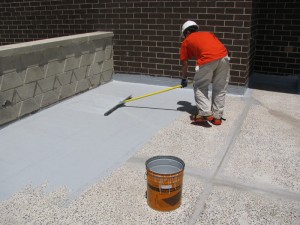
Fluid-applied membranes create a continuous protective layer over properly prepared concrete. Depending on the product, they may be used on walls, balconies, decks, terraces, and other exposed surfaces.
Traffic-Bearing Deck Coatings
Traffic-bearing systems are designed for concrete surfaces that receive pedestrian or vehicle traffic. These systems are commonly used on parking decks, balconies, ramps, and elevated walkways.
The coating must withstand abrasion, movement, weather exposure, and the anticipated level of traffic.
Elastomeric Coatings
Elastomeric coatings are flexible systems that may be used on certain vertical concrete and masonry surfaces. Their flexibility can help accommodate limited movement and bridge very small, nonstructural surface cracks when the product and substrate conditions are appropriate.
Penetrating Concrete Sealers
Penetrating sealers enter the concrete rather than creating a thick surface membrane. They can help reduce water and chloride absorption while generally preserving the appearance and vapor permeability of the concrete.
They are not a substitute for repairing active cracks, failed joints, or heavily deteriorated concrete.
Crack Injection
Urethane or epoxy injection may be used for certain cracks, depending on whether the objective is to stop active water leakage or restore structural continuity.
The crack must first be evaluated to determine its cause, width, movement, location, and whether it is actively leaking.
Joint and Sealant Replacement
Many high-rise leaks originate at failed expansion joints, control joints, window perimeters, railing penetrations, and connections between different building materials.
Removing failed sealant, preparing the joint, installing suitable backer material, and applying a compatible sealant can be an essential part of the waterproofing system.
Why Concrete Must Be Repaired Before Waterproofing
Applying a coating over cracked, loose, contaminated, or spalling concrete is unlikely to produce a durable result. The coating may blister, separate, crack, or conceal deterioration that continues underneath it.
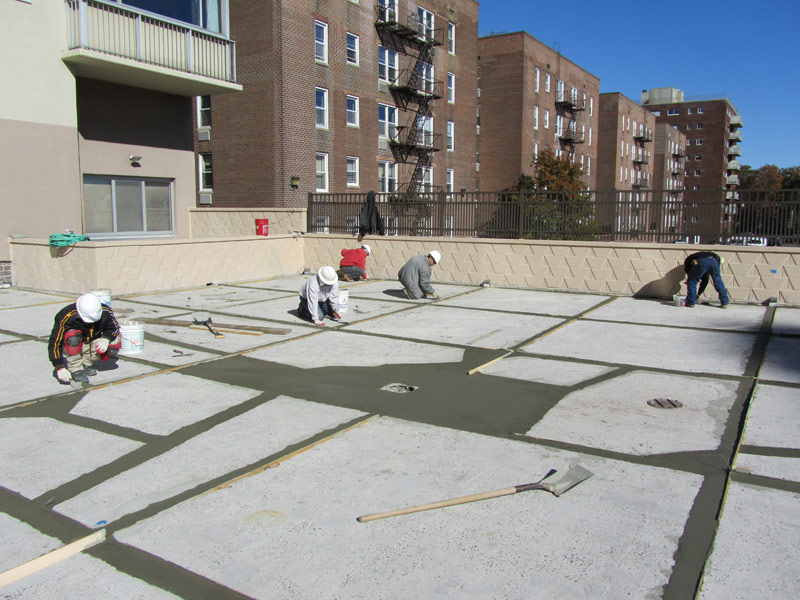
A professional restoration and waterproofing project may involve:
- Inspecting and documenting the concrete: The contractor identifies cracks, leaks, spalls, failed joints, drainage problems, and visible corrosion.
- Determining the source of water: Water testing or additional investigation may be needed because the visible leak is not always located directly below the entry point.
- Removing unsound concrete: Loose and deteriorated material is removed until sound concrete is reached.
- Treating exposed reinforcing steel: Corrosion is removed, the steel is evaluated, and appropriate protective or supplemental measures are completed as required by the project specifications.
- Restoring the concrete: Compatible repair materials are installed and properly cured.
- Repairing cracks and joints: Cracks, penetrations, and sealant joints are addressed using materials suited to their movement and exposure.
- Preparing the surface: Dirt, coatings, laitance, contaminants, and other bond-inhibiting materials are removed.
- Applying the waterproofing system: The selected membrane, coating, or sealer is installed according to project requirements and manufacturer instructions.
- Inspecting the completed work: Coverage, termination points, drainage details, and repaired transitions are reviewed before the project is closed.
When significant structural deterioration is suspected, a licensed engineer may need to evaluate the condition and prepare repair details or specifications.
Signs Your Building May Need Concrete Waterproofing
Building owners and property managers should schedule an inspection when they notice:
- Recurring leaks after rain or snow
- Rust stains on concrete surfaces
- Cracks that continue to widen or return
- Concrete flaking, scaling, or breaking away
- Exposed reinforcing steel
- Wet ceilings beneath balconies or decks
- Failed balcony or parking-deck coatings
- Loose, cracked, or missing joint sealant
- Standing water near drains
- Efflorescence or white mineral deposits
- Peeling paint or bubbling interior finishes
- Dampness in garages, basements, or mechanical rooms
These symptoms do not all indicate the same problem. A proper assessment is needed before recommending a coating, membrane, injection system, concrete repair, or drainage correction.
How Often Should High-Rise Concrete Be Inspected?
Exterior concrete, balconies, parking areas, sealant joints, coatings, and drainage components should be reviewed as part of the building’s regular maintenance program.
The appropriate inspection frequency depends on the building’s age, construction, exposure, previous repairs, and applicable regulatory requirements. Properties near coastal environments, heavily traveled roads, or areas where deicing salts are frequently used may require closer monitoring.
Inspections should also be performed after severe storms, significant freeze-thaw seasons, facade impacts, or newly reported leaks.
Professional High-Rise Concrete Waterproofing in New Jersey
Adriatic Restoration provides concrete repair and waterproofing services for high-rise buildings, condominium communities, apartment complexes, parking structures, offices, commercial properties, and landmark buildings throughout New Jersey.
Our services include:
- Concrete crack and spall repair
- Exposed reinforcing-steel treatment
- Waterproof coatings and membranes
- Traffic-bearing deck systems
- Expansion and control-joint repairs
- Balcony and terrace waterproofing
- Parking-garage restoration
- Facade waterproofing and restoration
- Leak investigation and water testing
Because Adriatic Restoration performs both concrete restoration and waterproofing, our team can address deteriorated concrete before installing the protective system. This provides a more complete solution than covering damaged concrete with a coating alone.
Learn more about our concrete waterproofing services, balcony waterproofing, and parking garage restoration.
To schedule an assessment for your high-rise or commercial building, call Adriatic Restoration at (201) 338-4642 or contact our team online.
Frequently Asked Questions
Can concrete be waterproofed after it has already started leaking?
Yes, but the source and cause of the leak must first be identified. Active cracks, failed joints, drainage problems, and damaged concrete may need to be repaired before a waterproofing system is applied.
Can waterproofing stop concrete spalling?
Waterproofing can help reduce future water exposure, but existing spalled concrete and corroded reinforcing steel must first be repaired. Coating over loose or deteriorated concrete will not restore the damaged area.
What is the best waterproofing system for a high-rise building?
The best system depends on the surface and exposure. A balcony may require a traffic-bearing membrane, while a vertical facade may need a penetrating sealer or elastomeric coating. Cracks, joints, and below-grade walls may require different treatments.
How long does concrete waterproofing last?
The service life depends on the system, surface preparation, exposure, traffic, drainage, installation quality, and ongoing maintenance. Waterproofed surfaces should still be inspected regularly and repaired or recoated when signs of wear develop.
Does the entire building need to be waterproofed at once?
Not always. Some projects can be completed in phases based on the most vulnerable elevations, balconies, decks, joints, or areas with active leakage. A condition assessment can help the property owner prioritize the work.
Should an engineer inspect cracked concrete?
An engineer should be consulted when cracks appear structural, continue to move, affect major structural components, or are accompanied by significant spalling, exposed reinforcing steel, displacement, or other concerning conditions.