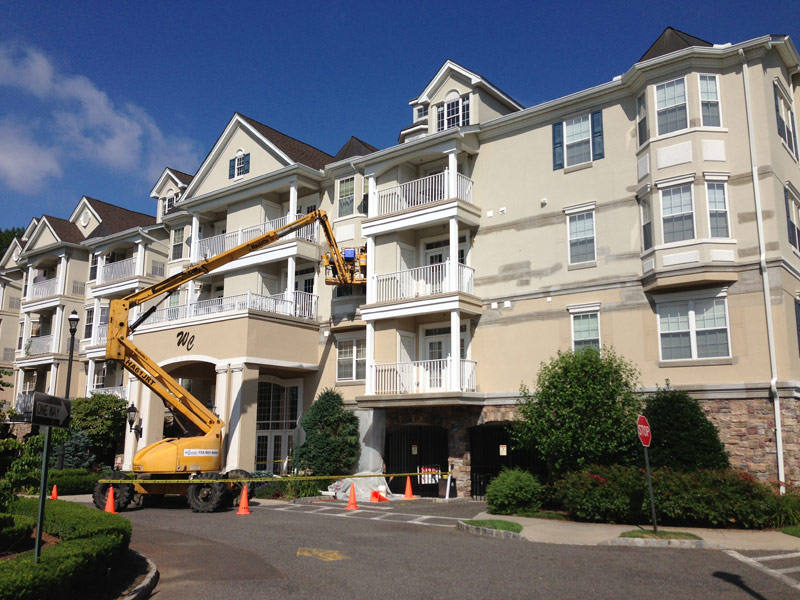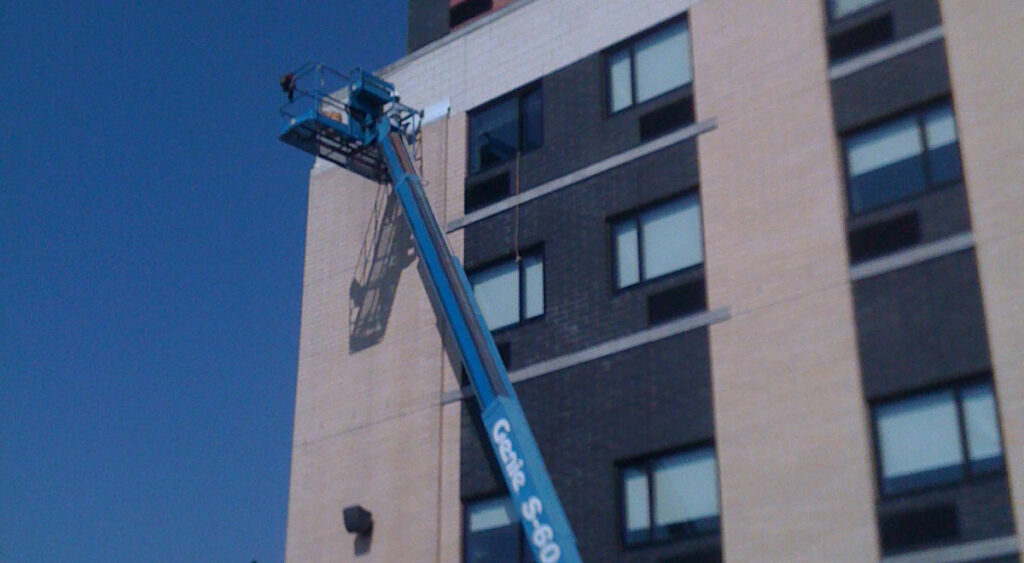
Your building’s facade does more than create curb appeal. It also acts as one of the first lines of defense against water intrusion, moisture damage, mold growth, and long-term structural deterioration. Over time, exposure to rain, snow, humidity, temperature changes, and freeze-thaw cycles can weaken exterior materials and allow water to penetrate the building envelope.

For commercial buildings, apartment complexes, condominiums, and mixed-use properties throughout New Jersey, facade waterproofing plays an important role in protecting both the appearance and structural integrity of a property.
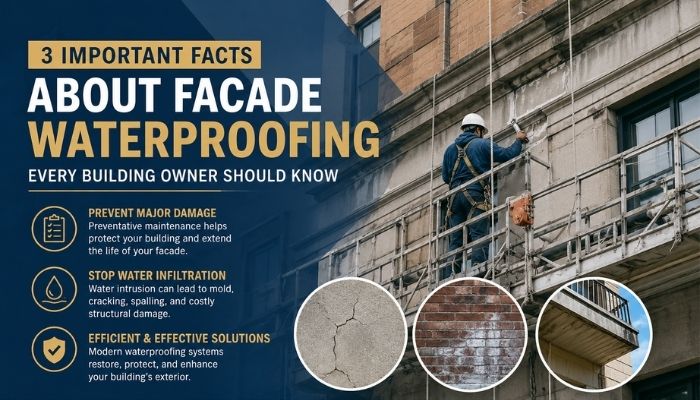
Below are three important facts every property owner and manager should know about facade waterproofing.
1. Facade Waterproofing Starts With Preventative Maintenance
Many building owners wait until visible leaks, cracking, or deterioration appear before addressing exterior waterproofing problems. Unfortunately, by the time those signs become obvious, water infiltration may already be causing hidden damage behind the facade.
Routine inspections and preventative maintenance help identify issues early before they turn into major restoration projects. Small cracks in masonry, deteriorated mortar joints, damaged sealants, and failed coatings can all allow moisture to enter the building over time.
Regular facade inspections and maintenance can help extend the lifespan of:
- Brick masonry
- Concrete facades
- Stucco and EIFS systems
- Balconies and terraces
- Exterior sealants and expansion joints
- Parking structures and retaining walls
In climates like New Jersey, where buildings are exposed to constant seasonal temperature changes, preventative waterproofing becomes even more important. Freeze-thaw cycles can cause trapped water to expand inside masonry and concrete, leading to cracking, spalling, and long-term structural deterioration.
Learn more about our Facade Restoration Services for commercial and residential buildings throughout New Jersey.
2. Water Infiltration Can Lead to Serious Structural Damage
Water intrusion is often more damaging than many property owners realize. When moisture enters a building facade, it can slowly weaken structural materials and create costly repair issues over time.
Common problems caused by facade water infiltration include:
- Cracked or deteriorating masonry
- Concrete spalling
- Rusting steel reinforcement
- Mold and mildew growth
- Interior water damage
- Bubbling paint and staining
- Balcony and terrace leaks
- Structural weakening of exterior walls
According to the National Institute of Building Sciences, moisture intrusion is one of the leading causes of building deterioration in commercial and residential structures.
Ignoring early signs of water infiltration can significantly increase restoration costs later. What begins as a small crack or failed sealant joint may eventually require extensive masonry repair, waterproofing, or full facade rehabilitation.
If your building already shows signs of cracking, loose masonry, leaks, or visible deterioration, our Masonry Restoration Services and facade repair solutions can help restore and protect the structure.
3. Modern Facade Waterproofing Is More Efficient Than Many Building Owners Expect
Many property owners worry that facade waterproofing or restoration projects will be disruptive, overwhelming, or excessively time-consuming. In reality, modern restoration and waterproofing systems allow experienced contractors to complete projects efficiently while minimizing disruption to occupants and tenants.
Every building requires a different waterproofing approach depending on factors such as:
- Building age
- Exterior materials
- Existing damage
- Exposure to moisture
- Previous repairs
- Structural conditions
At Adriatic Restoration, every facade waterproofing project begins with a detailed inspection to determine the root cause of moisture intrusion. From there, the appropriate restoration and waterproofing systems are selected based on the building’s condition and material type.
Depending on the project, waterproofing solutions may include:
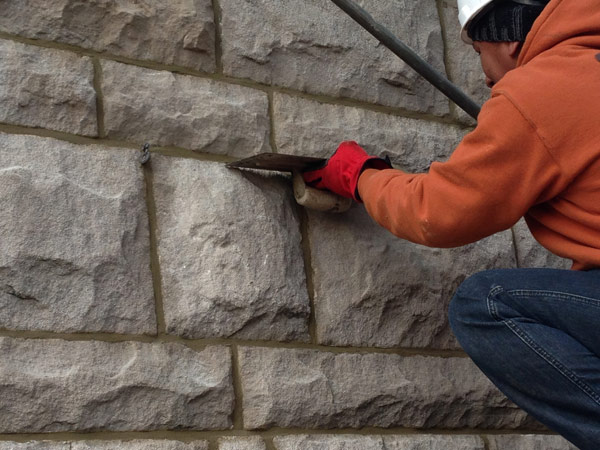
- Masonry sealing and coatings
- Crack repair and repointing
- Concrete restoration
- Expansion joint replacement
- Sealant replacement
- Balcony waterproofing systems
- EIFS and stucco repair
The International Concrete Repair Institute (ICRI) also emphasizes the importance of early building envelope maintenance and proper moisture protection to prevent larger structural failures.
Signs Your Building May Need Facade Waterproofing
If you notice any of the following issues, your building may benefit from a professional facade inspection:
- Water stains on interior walls or ceilings
- Cracks in brick, stucco, or concrete
- Efflorescence or white powder on masonry surfaces
- Leaking balconies or terraces
- Loose or deteriorating mortar joints
- Visible mold or mildew growth
- Peeling paint near exterior walls
- Concrete chipping or spalling
Addressing these problems early can help prevent more extensive structural repairs later.
Professional Facade Waterproofing & Restoration in New Jersey
At Adriatic Restoration, we provide facade restoration, waterproofing, masonry repair, balcony repair, and exterior building restoration services throughout New Jersey.
Our team works with commercial buildings, apartment complexes, condominiums, mixed-use properties, parking structures, and residential buildings across Bergen County, Hudson County, Essex County, Passaic County, and surrounding New Jersey communities.
Whether your building requires preventative waterproofing maintenance or large-scale facade restoration, our experienced team can help identify the source of water intrusion and recommend long-term solutions designed to protect your property.
Contact Adriatic Restoration today to schedule a facade inspection or learn more about our exterior restoration and waterproofing services.